
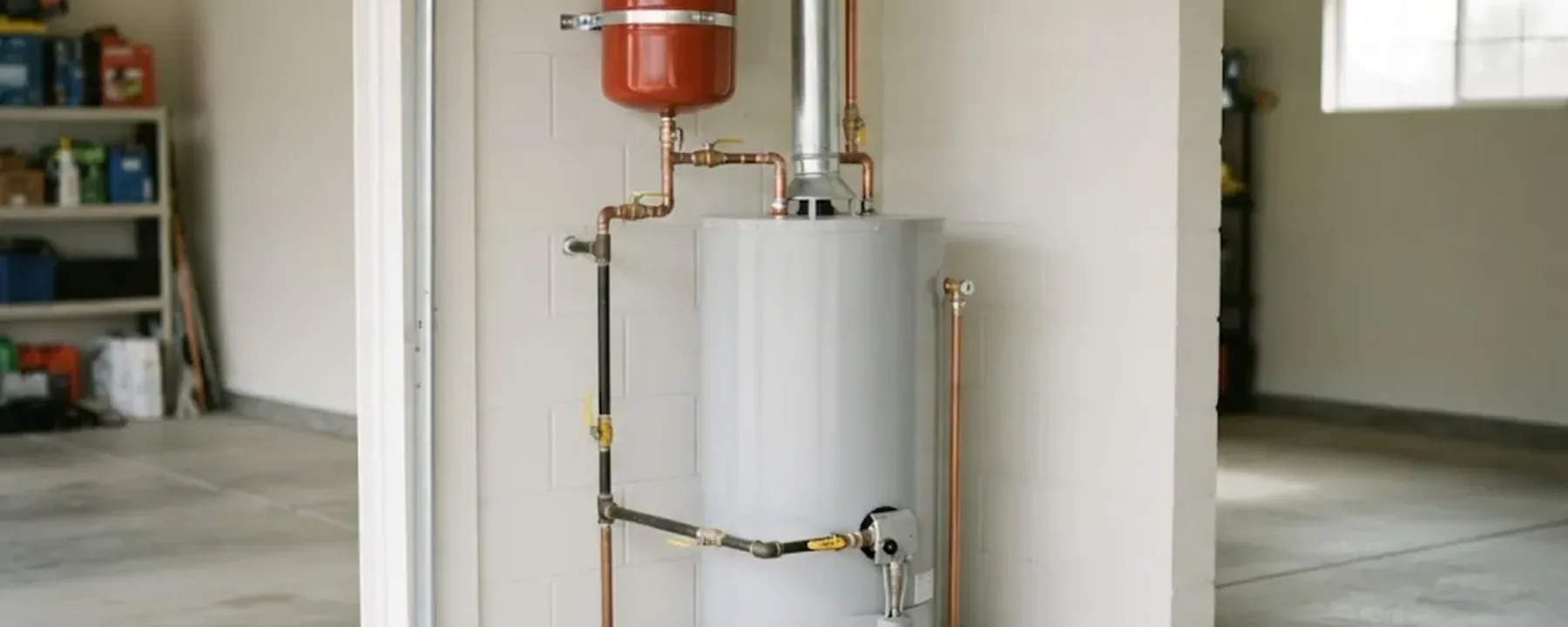
Water heater replacement means removing the old tank and installing a new one with fresh connections, a safe vent and a tested relief valve. It becomes an emergency when the shell leaks, when water reaches the controls, or when there is a gas smell. Close the cold water valve on top of the tank and switch the heater off at the gas control or the breaker. Then call (215) 714-6692 and tell the dispatcher what you see.
If you smell gas, leave the house first and call your gas utility or 911 from outside. The replacement can wait until the utility says it is safe.
Repair or replace: age, leak location and repeat repairs decide it
Three facts settle most cases. How old the tank is, where the water is coming from, and how many repairs the heater has already had. The plumber will ask for all three on the phone.
A repair is usually the right call
- Water at a fitting, valve or drain valve rather than the tank body
- A dead element, thermostat or igniter on a tank in good shape
- A relief valve that drips because it is worn
- The first repair on a tank that is not near the end of its life
Replacement is usually the better call
- Water seeping from the tank shell or the seam at the base
- A tank near the end of its usual life, based on the date on the label
- Rusty hot water while the cold side runs clear
- A second or third repair in a short time
- A repair that would cost close to a new unit
Signs a tank is finished
The date on the rating label
The serial number usually encodes the month and year the tank was made. Many tanks last roughly a decade, give or take, depending on the water and the upkeep. Read the label to the dispatcher and the plumber can decode it.
Water at the bottom edge
A tank that weeps from the base is leaking from inside the shell. The lining and steel have already worn through, so no replacement part will stop it.
Rust at the drain valve
Orange stains or crust around the drain valve or seams show moisture has been escaping for some time.
Brown hot water only
Run a hot tap and a cold tap into clear glasses. If only the hot side is discolored, the tank may be corroding.
Rumbling that never clears
Heavy sediment on an old tank wastes fuel and stresses the steel. Flushing helps a healthy tank but rarely rescues a worn one.
A growing repair history
One part replaced on an aging tank often leads to the next failure. After the third repair, a new tank usually costs less over time.
A leaking water heater: when replacement beats repair
Leaks send more people to the phone than any other tank problem, and the location tells most of the story. Water at the top, at the inlet and outlet pipes or at the relief valve, often comes from a fitting that can be tightened or replaced. Those are repair jobs, as long as the tank body is sound.
Water that collects under the tank or seeps from the bottom edge is different. Steel tanks have a glass lining and an anode rod to protect them, and once water gets through, the shell cannot be sealed. Tape, epoxy and sealant do not hold under heat and pressure, so a plumber will not call that a repair.
In a garage or at a slab edge, confirm where the water starts before deciding. Water can travel along a floor before it shows, and a supply line under the slab can mimic a heater leak. A leak detection visit can rule that out, and our water heater repair page covers the fittings and valves worth checking first.
Tank failed and water is spreading?
Close the cold water valve, turn off the fuel or power, then call. A dispatcher is on the line at any hour.
Tank down and water on the floor right now? Do this while you wait
These steps hold the damage down until the plumber arrives. Same-day appointments are available when the schedule allows, and the dispatcher will tell you what is possible when you call.
Close the cold water valve
It is the valve on the pipe feeding the top of the tank. Turn it clockwise until it stops. If it will not close, shut the main water valve and say so on the phone.
Turn off the fuel or power
Turn a gas control dial to off. For an electric tank, switch off its breaker only if the panel is dry and you are not standing in water.
Keep people and pets away
Hot water from a ruptured tank can scald. Keep children and pets out of the room until the water has cooled and been cleared.
Move what is on the floor
Lift boxes, rugs and electronics off the wet area. Photograph the tank, the water and the damage first for your insurer.
Read the rating label aloud
Tank size, fuel type and age help the plumber arrive with a matching unit and the right fittings.
What a replacement visit involves, from shutoff to hot water
Most replacements follow the same order, though houses differ. Here is what to expect so nothing about the visit is a surprise.
Shut down and drain
The plumber closes the water and fuel, powers down the unit and drains the old tank to a floor drain or outdoors through a hose.
Disconnect and remove
Water lines, the gas connector or electrical feed, the vent and the relief valve pipe come off. The old tank is carried out, and it is heavy, so access matters.
Set the new tank
The floor and any pan are checked, and the tank is placed level. Older basements may need a new platform or pan.
Reconnect water, fuel and vent
New flexible connectors and shutoff valves are common. On gas units the vent is checked for slope, joints and draft, since a poor vent is a carbon monoxide risk.
Fit the safety parts
That means a temperature and pressure relief valve with a discharge pipe, and an expansion tank where the system calls for one.
Fill, test and light
The tank is filled, air is purged, every joint is checked for leaks and the unit is lit or powered up. The plumber sets the thermostat and walks you through the shutoffs.
Tank, tankless or heat pump: choosing the replacement type
A conventional tank is the usual emergency replacement because it often fits the existing connections and vent with the least change. Gas and electric tanks come in standard sizes, so the swap can be a same-day job when the right unit is on hand. Pick the size by how many people use hot water at the same time, not by the old label alone.
A tankless unit heats water as it flows, so there is no tank to leak or run out. It usually needs a larger gas supply, a different vent and sometimes new electrical work, which is why it is rarely the same-day choice. Read about tankless water heaters before deciding, and see water heater installation if you want to plan the change rather than rush it.
A heat pump water heater moves heat from the surrounding air into the tank and often uses much less electricity than a standard electric tank. It needs open space around it and a condensate drain. Moving from gas to a heat pump also changes the fuel, the electrical capacity and the vent, so it is a planning job more than an emergency one. Programs and incentives change, so ask before you buy and do not count on one in advance.
What a clear quote for a new water heater should list
A price you can read line by line is worth more than a low number you cannot. Ask that these items are written out before work starts.
- Tank details: Make, size, fuel type and the manufacturer's warranty terms.
- Venting: Whether the existing flue or vent is reused or changed. This matters most on gas units.
- Fuel connection: The gas line shutoff and connector, or the electrical feed, and any change to either.
- Water connections: New shutoff valves and flexible connectors, and any fittings that look corroded.
- Safety parts: The relief valve, its discharge pipe and an expansion tank if one is needed.
- Paperwork: Who handles any township permit, if one applies. Ask Abington Township's Community Development office what applies at your address, since plumbing permit applications there come from a registered master plumber.
- Haul-away and cleanup: Removal of the old tank and the debris.
- Labor and timing: Any after-hours rate, stated before the plumber is sent.
What moves the price of a new water heater
The unit is only part of the bill. These are the drivers, and the plumber can name the numbers once the job is seen.
If a failed tank flooded the room, many homeowner policies respond to the sudden water damage but not to the heater itself, so photograph everything and call your insurer early. You get a clear price before work starts. Call (215) 714-6692 for yours.
Call for your priceFlooded basements and heaters in the Abington floodplains
Abington Township's own planning documents call flooding the most common natural hazard in Montgomery County and a serious problem in the township, with major floods in 1931, 1964, 1996 and 2001. If your heater stood in water, assume the controls are damaged. Gas valves, thermostats and wiring that took water are often replaced rather than dried out.
Crestmont and Roslyn
The Sandy Run floodplain runs from Roy Chester Park in Willow Grove through Crestmont and Roslyn. A heater on a low basement floor here can be flooded by creek overflow, not only by a burst pipe, so ask whether the new tank can sit on a raised pad.
Glenside along the Jenkintown line
The Tookany (Baeder) Creek floodplain runs through Glenside beside the Jenkintown boundary near Baederwood Park. For basements on those streets, placement matters as much as the model you choose.
Rydal, Meadowbrook and the Pennypack side
The township's planning documents place a floodplain along Pennypack Creek toward Meadow Brook and Valley Road. If your basement takes water in storms, ask about the cause too, starting with sump pump repair.
Water reached the heater? Do not restart it
Do not relight a gas heater or switch the power back on for an electric one that has been under water. If you smell gas or suspect damage to the gas line, leave and call your gas utility or 911 first. After that, call us, and we can send a plumber to Glenside, Willow Grove and nearby towns when the house is safe.
Water heater replacement questions from Abington homeowners
Yes. The dispatch line is open 24 hours a day, every day, including holidays. Call, say whether the tank is leaking or flooded and give your address. Same-day appointments are available when the schedule allows.
Look at three things. Water from the tank shell, a tank near the end of its usual life, or a string of repairs all point to replacement. Water at a valve or fitting on a healthy tank is usually a repair.
Often, when a standard tank in a common size fits the existing connections and the schedule has room. Moving to tankless or a heat pump, or changing the vent or fuel, takes more planning. The dispatcher can tell you what is possible for your house.
If water reached the burner, controls or wiring, do not restart it. Wet gas controls and thermostats are often replaced instead of dried out, so a plumber should inspect the unit. Leave and call the gas utility or 911 first if you smell gas.
Yes, it is possible, but it changes the fuel, the electrical capacity and the venting, and the new unit needs open space and a condensate drain. It is usually a planned project. Programs and incentives change, so ask before you buy.
We cannot say for your address, so ask Abington Township's Community Development office, which administers the plumbing ordinance. Plumbing permit applications there come from a master plumber registered with the township, and your plumber can tell you who files any paperwork.
It can be, depending on how much hot water you use and what your house can support. Tankless units usually need a larger gas supply and a different vent, so they are rarely a same-day choice. See our tankless water heater page for the trade-offs.
A standard like-for-like swap often takes a few hours, but it depends on the house, access and the unit. Gas vent changes, a new gas line or a move to another fuel take longer. The plumber will give you a realistic window for your job on site.