
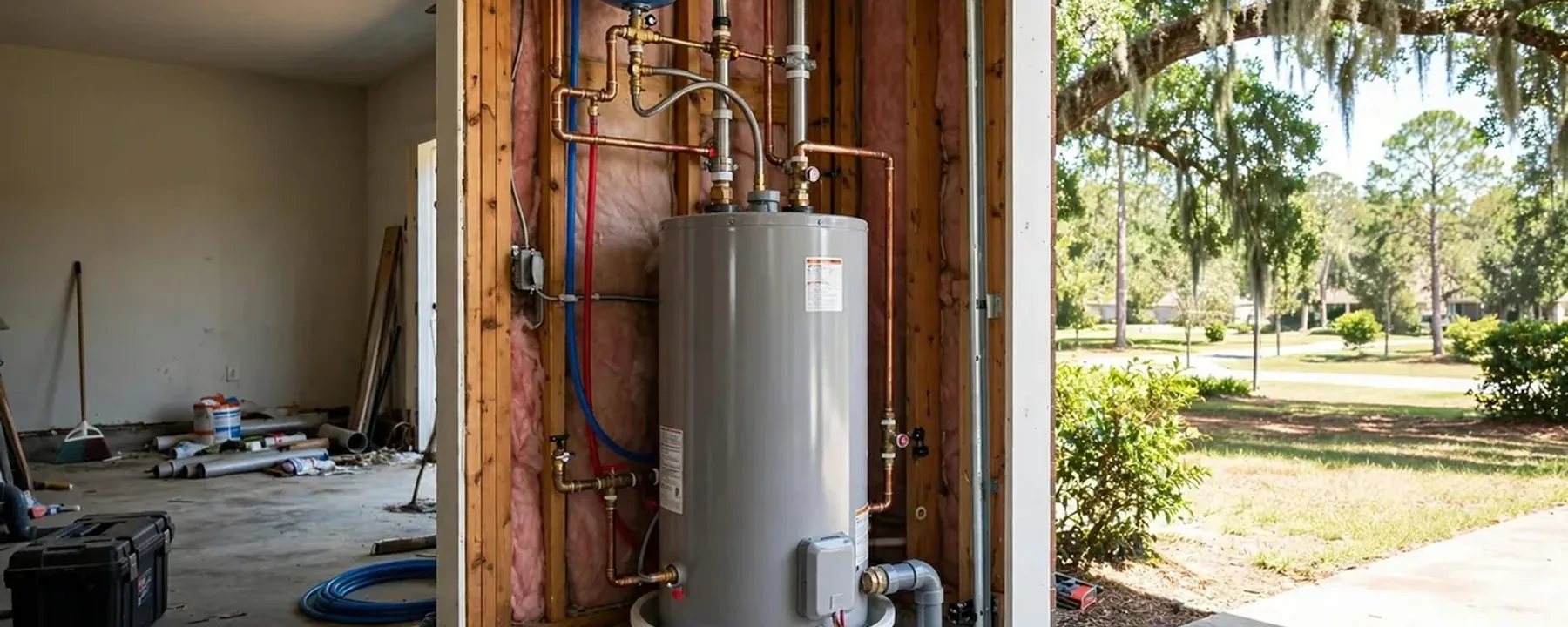
Water heater installation in Abington, PA means choosing the fuel, size and venting, setting the new unit, connecting water and gas or power, and testing it before we leave. Most delays on install day come from one item that nobody decided ahead of time.
Work through these eight points first. When you call (215) 714-6692, we can talk through each one and book a same-day appointment when available or a time that suits your week.
- Fuel Decide between gas, electric or a heat pump unit. Switching fuels changes the vent, the gas line or the electrical circuit, so settle this before anything else.
- Size Tank capacity should match how many people shower, run a dishwasher and do laundry at the same hour. A bigger tank than the household needs just holds more hot water that cools off unused.
- Vent A gas tank needs a flue that carries exhaust outside and slopes the right way. If the old flue is rusted, undersized or tied to an unused chimney, it may have to change.
- Gas line Check that the gas pipe and shutoff reach the new spot and can feed the new burner. A bigger input rating can mean a larger pipe.
- Expansion tank If a check valve or pressure reducing valve closes the system, heated water has nowhere to expand. A small expansion tank often handles that, so ask the plumber whether yours needs one.
- Drain pan A pan with a drain line under the tank limits damage if it ever leaks, which matters most above finished space or on an upper floor.
- Shutoff valves Old valves that have not moved in years can fail when turned. Replacing them during the swap costs little compared with a flooded basement later.
- Haul-away A full 40 or 50 gallon tank is heavy and awkward on stairs. Settle who removes the old unit and how it gets out of the house.
What tank, tankless and heat pump installs ask of your house
The three types do the same job but ask for very different things from the building. This table compares what each one needs, so you can see which fits your basement or utility room before you shop.
| What the house must supply | Tank (gas or electric) | Tankless | Heat pump |
|---|---|---|---|
| Fuel or power | Gas line and burner, or a 240-volt electric circuit | Gas with a larger line, or electric with heavy electrical service | A 240-volt circuit in most homes, plus a plan for cool exhaust air |
| Venting | Gas units need a flue. Electric tanks need none | Sealed or direct vent through a wall or roof, with a plan for condensate | No flue, but the room needs enough open air around it |
| Floor space | A footprint plus a drain pan and clearance | Wall mounted, so it frees floor space | Taller and wider than a standard tank in most models |
| Drain and discharge | Pressure relief discharge pipe and pan drain | A drain for flushing and for condensate on high-efficiency models | A condensate drain or pump, plus the relief discharge |
| Water side | Shutoffs, flex connectors, often an expansion tank | Isolation valves for flushing, and often a pressure relief setup | Shutoffs, flex connectors, often an expansion tank |
| Best fit | A like-for-like swap in the same spot | A home willing to upgrade supply lines or service | A room with space, mild temperatures and a nearby circuit |
Equipment details change by brand and model, so the plumber confirms the exact needs from the label and manual before ordering. For the unit that suits a household that wants steady hot water without a tank, see tankless water heater service in Abington.
Ready to plan your install?
Call with your fuel, tank size and a photo of the old label. We book same-day appointments when available.
Vent and gas safety come before everything else
If you smell gas near a water heater or anywhere else, do not look for the source. Leave the building right away, leave the door open behind you, and call your gas utility or 911 from outside. Do not call a plumber first and do not flip switches or use a phone inside.
A weak or blocked vent is the quieter danger. Exhaust from a gas burner can include carbon monoxide, and a flue that is cracked, disconnected or pitched wrong can send it into the room. Soot streaks above the tank, a burner flame that flickers or sags, or a carbon monoxide alarm sounding are all reasons to shut the unit off and call.
On an install, the plumber checks the draw of the flue, the joints and the clearance to anything that can burn. If a gas line has to be moved or enlarged, that work is done and pressure tested by a licensed plumber, never by trial and error.
What an older Abington basement means for the new unit
The median house in Abington Township was built in 1956, and about 61 percent of the township's homes predate 1960, according to Census American Community Survey estimates for 2020 to 2024. A house that age often has a chimney flue sized for an older, hotter burner, and the gas and water lines around the tank may be original. Both are worth a look before you pick a replacement.
That is also why a swap from a gas tank to a heat pump or an electric unit is a bigger decision in these houses than it sounds. An electric unit drops the flue question but adds a heavy circuit, and the panel may or may not have room. Ask the plumber to check the flue and the panel together, so you are not paying to fix one and finding a problem with the other.
Houses in Glenside and Willow Grove share much of this housing vintage, so the same questions apply there.
What install day looks like once the choices are made
A typical tank swap often takes a few hours, though a new vent, a moved gas line or an electrical circuit can stretch it. Here is the usual order.
Shut off and drain the old unit
The plumber closes the water and fuel, then drains the tank to a floor drain or hose. Expect the hot water to be off until the new unit is filled and heating.
Disconnect and remove
Gas, vent, water and discharge lines come off, and the old tank leaves the house on a dolly. This is the part that takes two people.
Set the pan, valves and new unit
The new shutoffs, drain pan, expansion tank and flexible connectors go in, then the heater is leveled and connected.
Vent and fuel connections
On a gas unit the flue is connected and checked, the gas joints are tested for leaks and the shutoff is labeled. On an electric unit the circuit and breaker are matched to the nameplate.
Fill, test and walk you through it
The tank fills before power or flame goes on, so the elements and burner never run dry. The plumber then checks for leaks, sets the temperature and shows you where the shutoffs are.
What moves the price of a water heater installation
We give you a clear price before work starts, and it is built from the items below. Two houses with the same size tank can get very different quotes because of what is around the tank.
A worn-out heater is usually a maintenance cost, not an insured event, though a sudden leak that damages the house is a different matter, so ask your insurer. If a unit is leaking right now, see our page on water heater repair, or call (215) 714-6692 for your real number.
Call for your priceWhat you can prepare and what stays with a plumber
Some of the groundwork is easy for a homeowner and saves time on the day. The connections and anything involving gas or the flue are not.
Good to do ahead of time
- Clear a path from the stairs to the heater
- Note the size, fuel and model number on the old label
- Find your main water shutoff and test that it turns
- Decide who will be home to approve the final price
- Take a photo of the area for the plumber
Leave to a licensed plumber
- Disconnecting or reconnecting gas piping
- Sizing and setting the flue or vent
- Wiring a new circuit or breaker
- Choosing and installing the expansion tank
- Pressure and leak testing before the unit runs
Permits and the township
Plumbing permit applications in Abington Township come from a master plumber registered with the township. For what applies to your swap, ask Abington Township's Community Development office, which administers the plumbing ordinance. Your plumber can confirm it with them before the work starts.
Choosing between replacing, repairing and a bigger upgrade
Not every old heater needs a new one right now. If the tank is sound and the problem is a part, a repair may be the better call, and our page on water heater repair explains how that decision usually goes. If the tank itself has failed, water heater replacement covers what to expect.
When the project grows into new gas lines, a relocated heater or a remodel, it belongs with plumbing installation planning so everything is done in one visit.
Water heater installation questions from Abington homeowners
A straight tank swap often takes a few hours, but it depends on the house. New venting, a moved gas line, a new circuit or a hard-to-reach basement can add time. The plumber can give you a more honest window after seeing the existing setup.
We do not state a rule here because the answer depends on the work. Ask Abington Township's Community Development office, which administers the plumbing ordinance. Plumbing permit applications come from a master plumber registered with the township.
Often yes, but it is a bigger project than a like-for-like swap. A heat pump unit needs a 240-volt circuit, open air around it and a condensate drain, and the old gas line and flue are capped or removed. The plumber checks the room, the panel and the drain first.
If a check valve or pressure reducing valve keeps the system closed, heated water has nowhere to go, so an expansion tank is often added. Not every house needs one. The plumber looks at what is on your incoming line before deciding.
Size follows how many people live in the house and how much hot water they use at the same time. A household that showers back to back and runs laundry usually needs more capacity than a couple. Tell the plumber about your busiest morning and they can match it.
Removing the old tank is normally part of the job, and the quote should say so. Confirm it when you call, and clear the path from the stairs ahead of time so the unit can come out safely.
Leave the building right away, leave the door open, and call your gas utility or 911 from outside. Do not turn lights on or off, use a phone inside or call the plumber first. Return only when the utility says it is safe.
We do not recommend it. Gas joints, the flue and carbon monoxide risk all need testing with the right tools. Plumbing permit applications in the township also come from a registered master plumber, so a licensed professional is the normal route.