
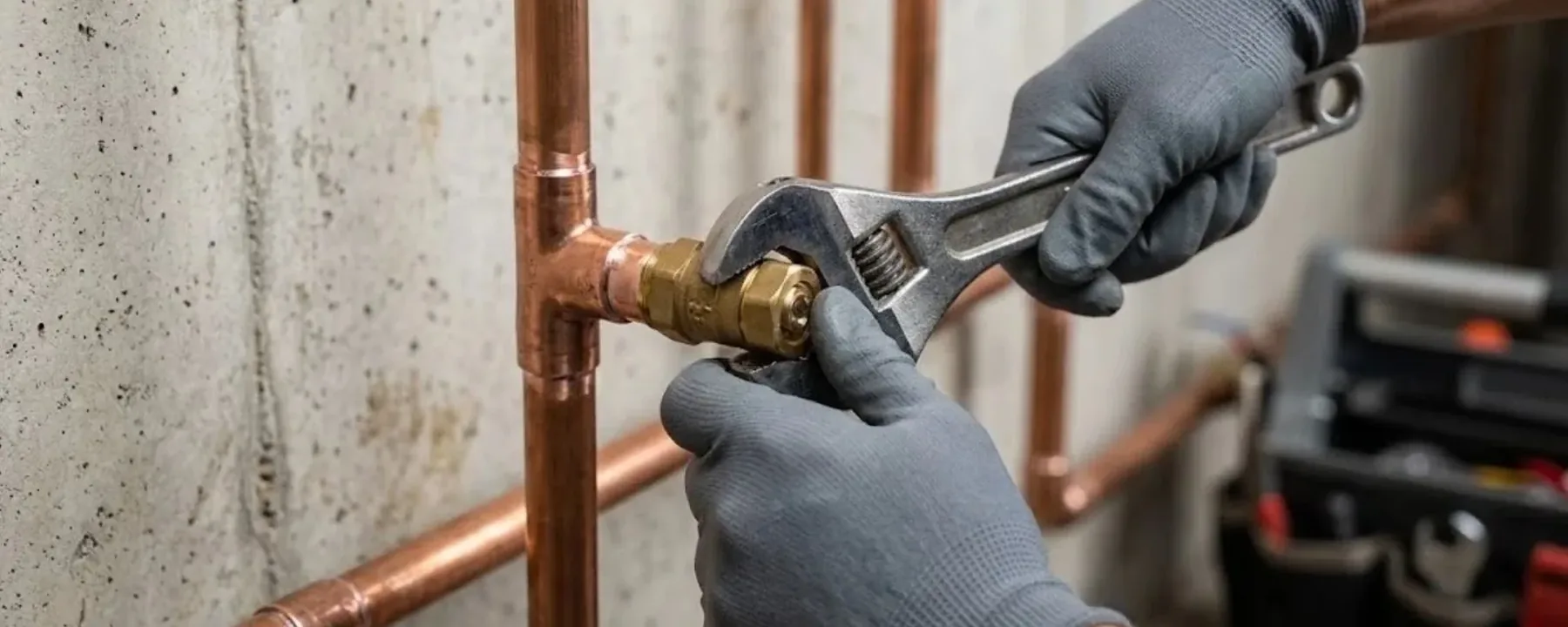
Plumbing installation covers any job where a plumber adds new pipes, fixtures or equipment to a house in Abington. Most of these are planned projects, so you have time to compare options and ask questions. The grid below lists the jobs people call about most, and each one raises a few questions worth settling before work starts.
Kitchen and bath fixtures
New sinks, faucets, toilets, tubs and showers. The plumber checks that the supply stops, drain size and vent can handle the new fixture.
Laundry hookups
Hot and cold supply valves, a standpipe and a trap for a washer. A new laundry room also needs a drain that can carry the washer's output.
Outdoor spigots
A new hose bib or a frost-resistant one in place of an old one. The shutoff for it should sit inside the heated part of the house.
Bathroom additions
A new bath needs supply, drain and vent, and the closest existing lines decide how hard the job is.
Basement bathrooms
Below-grade drains often sit higher than the fixture, so the plan may call for a sewage ejector. See the notes in the section below.
Gas appliance lines
A new range, dryer, grill or fireplace may need a new gas line. This is safety work and gets its own section further down the page.
How a plumbing installation gets planned and done
Good installs begin with a walkthrough where the plumber looks at what the new fixture or equipment needs and what the existing lines can supply. The questions are simple. Where does the supply come from, where does the drain go, and does the fixture have a vent so it drains quietly and keeps sewer gas out?
Next comes rough-in, which means running the new supply and drain lines before the walls are closed. For a retrofit in an existing house, that often means cutting small access holes and fishing pipe through. Fixtures and trim go on last, after the lines are pressure-tested for leaks.
Most Abington houses were built before 1960, so new work often ties into older pipe. The plumber should look at what you have before promising a clean tie-in. If the supply near the connection is aging galvanized steel, it may make more sense to replace that section at the same time, which is a conversation covered on the repiping page.
Gas smell means leave first, call second
If you smell gas at any time, do not turn on lights, flip switches or use a phone inside. Leave the building, then call the gas utility or 911 from outside. Call a plumber only after the gas company or fire department says the building is safe. This page is about planned gas work, not leaks.
Planning a new fixture, bath or gas line?
Call and describe the project. We will tell you what the plumber needs to know before pricing it.
Gas line inspection and installation
A gas line install adds a branch from your existing gas piping to a new appliance, such as a range, dryer, fireplace, grill or generator. It is planned work with strict safety steps, and it should be done by a licensed plumber who tests every joint before the appliance is used.
A typical job starts with a check of the existing pipe size and meter capacity, because a new appliance adds load to the whole system. The plumber then runs the new line, fits a shutoff valve at the appliance, and tests the new piping under pressure for leaks before it is put into service. Ask the plumber to explain each step and to show you where the shutoff is when they finish.
A gas line inspection is a separate request. It is worth asking for if you are buying a house, have just had a remodel, or have old piping and are unsure of its condition. We do not promise response times for gas emergencies, which belong with the gas utility and 911 first. This page covers planned installs only, and a visit from the plumber is not a substitute for those emergency calls.
Backflow preventers and why they get tested
A backflow preventer is a valve assembly that keeps water from running backward into your clean supply. Without one, a drop in main pressure could in theory pull water from a sprinkler system, a boiler loop or a hose left in a bucket into the pipes that feed your kitchen tap.
Backflow assemblies are common on irrigation systems, fire sprinkler lines and some commercial equipment. They contain springs and rubber seals that wear, so they are tested to confirm the valves still seal. A testing visit usually involves a gauge kit that checks pressure across the valves, and the tester records the result.
We have not found a township or Aqua rule that says your property needs a test, so do not assume one applies. If you have an irrigation system or a commercial property, ask Abington Township's Community Development office and your water utility whether testing is required for your setup. A plumber can test and replace a failed assembly, and can tell you whether your system should have one. For businesses, the commercial plumbing page covers backflow in more detail.
Water softeners and filtration systems
A water softener swaps minerals that cause scale for sodium or potassium, and a filter removes particles or tastes. Before buying either one, find out what your water actually contains. We do not state your water hardness here because no hardness figure has been confirmed for Abington, so test it yourself and ask Aqua.
- Test your tap A home hardness test kit is cheap and quick, and a lab test gives a firmer answer. Test before you shop for equipment.
- Ask Aqua for its water quality report Aqua Pennsylvania publishes annual water quality reports and a lookup tool by area. Ask what the report says about the part of town you live in.
- Match the system to the problem Scale on fixtures and spotted dishes points toward softening. Taste or odor points toward carbon filtration. Different problems need different equipment.
- Check where it will sit Most softeners need a floor drain or standpipe for their rinse water, a power outlet and enough floor space near the main supply.
- Plan for the bypass and the drain A plumber installs a bypass valve so you can work on the unit without shutting off the house, and routes the discharge so it does not flood the basement.
Installation jobs you can do and jobs to leave to a plumber
Some small installs are fine for a careful homeowner. Anything that touches gas, the main, a drain or the vent is better left to a licensed plumber.
Reasonable to do yourself
- Swap a showerhead
- Replace a faucet with the same hole spacing
- Install a new toilet seat or supply line
- Connect a washer to existing valves and drain
- Add a faucet aerator or filter cartridge
Leave to a licensed plumber
- Any gas line or appliance connection
- New drain, vent or branch supply lines
- Basement bathroom rough-in or ejector pump
- Backflow assembly install and testing
- Anything that needs a township permit
What decides the price of a plumbing installation
Installation prices vary a great deal because the same fixture can be a simple swap or a major project. You get a clear price before work starts, and these factors explain the range.
Fixtures you pick yourself often come with a manufacturer warranty that depends on proper installation, so keep the paperwork. Ready to price your project? Call (215) 714-6692.
Call for your pricePermits and registration in Abington Township
Abington Township says plumbing permit applications must come from a master plumber registered with the township. In practice your installer should be handling the paperwork, and you can ask to see it. Ask which permit applies to your job before the work starts, and confirm with Abington Township's Community Development office.
The township also says every contractor performing work within the township is required to register with it. Separately, Pennsylvania requires home improvement contractors who do $5,000 or more of work per year to register with the Attorney General, and you can check a contractor at the Attorney General's online search. Ask any contractor you hire for both registrations and confirm them.
Pennsylvania does not license most construction contractors at the state level, so the township's registration and the Attorney General's list are the checks that count here. Keep copies of the permit and the final inspection record with your house papers, since a buyer will ask for them later.
New construction plumbing
For a new build or a large addition, plumbing happens in stages. The rough-in goes in before the drywall, an inspector looks at it, and fixtures and trim come last. If you are building and want plumbing quoted, bring your plans and the fixture list. Call (215) 714-6692 to describe the scope, whether you are in Abington or nearby Willow Grove, and see water heater installation if the project needs a new water heater as part of the work.
Plumbing installation questions from Abington homeowners
Ask Abington Township's Community Development office what applies to your project. Plumbing permit applications in the township come from a master plumber registered with the township, so your plumber normally files it.
Leave the building right away, without switching anything on or off. Call the gas utility or 911 from outside. Call a plumber only after the gas company or fire department says the building is safe to enter.
It is a valve assembly that keeps water from flowing backward into the clean supply when pressure drops. Irrigation systems and some commercial equipment commonly have one. Ask the township whether testing is required for your property.
Start by testing your tap water for hardness and asking Aqua for its water quality report. Scale on fixtures and spotted glasses point toward hard water, but a test gives you a firm number before you spend money.
Often yes, but basement drains may sit higher than the fixture, so a sewage ejector pump may be needed. A plumber has to see the floor, the drain depth and the vent options before saying what the job involves.
Leave gas connections to a licensed plumber. The pipe has to be sized for the load and every joint tested under pressure. A mistake can cause a leak that is hard to see and dangerous.
Abington Township says contractors working in the township must register with it, and plumbing permits come from a registered master plumber. Home improvement contractors doing $5,000 or more a year must also register with the Pennsylvania Attorney General.
Yes. A plumber can add or replace an outdoor spigot, and a frost-resistant model with the shutoff inside the heated part of the house is a common choice in Abington, where freezing weather lasts into spring.