
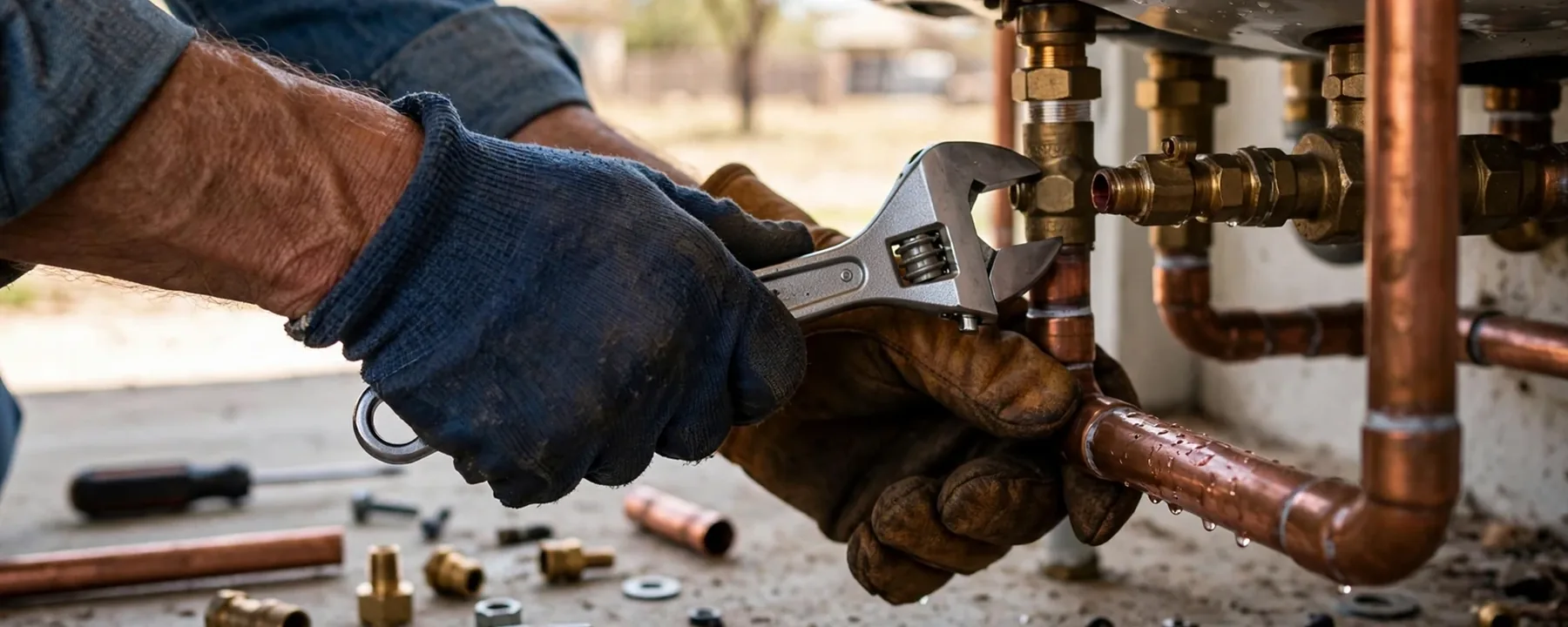
Water heater repair means finding the part that failed, whether it is a valve, a heating element, a thermostat or a burner, and fixing it while the tank itself is still sound. A small drip from a fitting or a dead element is often repairable. Water seeping from the tank shell is not. The table below sorts the common symptoms by likely cause and tells you whether to call now or book a visit.
If you smell gas near the heater, do not touch a switch, a lighter or a phone in the room. Leave the house, then call your gas utility or 911 from outside. Call us after you are safe.
Water heater symptoms, likely causes and when to call
| What you see or hear | Likely cause | Call now or schedule |
|---|---|---|
| Smell of gas near the heater | Leak at a gas line, valve or burner area | Leave first. Call the gas utility or 911, then call us from outside |
| Water spreading under the tank | Leaking tank shell, or a failed fitting or drain valve | Call now and close the cold water valve on top of the tank |
| Steady drip or spray from the pipe on the side of the tank | Relief valve opening from high heat or high water pressure | Call now if it runs steadily. Never cap it |
| Damp fittings on top of the tank | Loose or corroded water connections | Call the same day if it keeps dripping, or book a visit if it is a slow weep |
| No hot water at all on a gas tank | Pilot out, bad igniter or sensor, or a failed gas control | Check for gas smell first, then call today |
| No hot water on an electric tank | Tripped breaker, failed upper thermostat or burned-out element | Reset the breaker once. If it trips again, call |
| Hot water that runs out in minutes | Failed lower element, heavy sediment or a broken dip tube | Schedule a visit this week |
| Rumbling, popping or banging from the tank | Sediment baked onto the bottom of the tank | Schedule a visit. A flush may help if the tank is not leaking |
| Rusty or brown water on the hot side only | Corroding tank or a used-up anode rod | Schedule soon and ask for the tank's age to be checked. See water heater replacement |
| Blinking light or error code on the display | Sensor, igniter, control board or venting fault | Schedule unless there is a leak or a gas smell |
| Water far too hot, or a hissing tank | Thermostat set too high or failing, or overheating | Turn the heater off and call now |
This table is a guide for first decisions, not a diagnosis. The plumber confirms the cause on site before quoting any repair.
Tank leaking right now? What to do before the plumber arrives
These steps hold the damage down until help arrives. Same-day appointments are available when the schedule allows, and the dispatcher will tell you what is possible when you call (215) 714-6692.
Close the cold water valve
Look for the pipe feeding the top of the tank, usually with a handle or wheel. Turn it clockwise until it stops. If it will not turn, shut the main water valve instead and tell the dispatcher.
Turn the heater off
On a gas tank, turn the gas control dial to off or pilot. On an electric tank, switch off its breaker, but only if the panel is dry and you are not standing in water.
Stay out of standing water near power
A flooded floor with an outlet, a panel or a cord nearby is a shock risk. Leave the breaker alone and call from a dry spot.
Move what you can
Lift boxes, rugs and stored items off wet concrete or carpet. In a garage, move vehicles and tools away from the spreading water.
Read the label aloud on the phone
The rating label shows tank size, fuel type and date of manufacture. That helps the plumber decide whether to bring fittings, parts or a whole tank.
Photograph the damage
Take pictures of the tank, the water and anything that got wet before you clean up. Your insurer will usually ask for them.
Tank leaking or no hot water?
Close the cold water valve, switch the heater off, then call. A dispatcher is on the line at any hour.
Water heater leaking in the garage, at the slab edge or under the tank
A puddle under the tank is the most common reason people call us about a water heater. Start by working out where the water begins. Dry the floor, wrap a dry paper towel around each fitting on top of the tank, and check again after a few minutes. Wet fittings point to a repair. A dry top with water only at the bottom usually means the tank itself is leaking.
In a garage, a leak can run across the floor to a drain or a wall before you notice it. Heaters there often sit on bare concrete, so a slow weep can stain the slab for weeks. A drain pan only helps if its outlet is piped somewhere safe, and a full pan is a warning, not a fix.
Water at a slab edge or in a utility room needs a second look. If it seems to rise from the floor rather than run off the tank, a hot supply line under the slab could be the source. That is a job for leak detection, and the heater may be fine.
A leaking shell cannot be patched. Once water gets through the steel, the answer is a new tank, and draining it early saves floor. A leaking fitting, valve or drain valve is usually a repair.
Gas smell near the heater: leave first, then call
The order matters. Get everyone out of the house, do not use switches, lighters or a phone inside, and call the gas utility or 911 from outside. Call us only after you are safe, and expect the utility to clear the leak before any plumber touches the heater.
We do not promise a response time for gas leaks, because the utility handles the leak itself. A plumber handles the water heater afterward, including relighting it, checking the vent and testing the gas connections.
Gas, electric and heat pump tanks fail in different places
Gas tank
The usual suspects are the pilot or igniter, the thermocouple or flame sensor, the gas control valve and the flue. A blocked or backdrafting flue is a carbon monoxide risk, so a good plumber checks draft before calling the unit fixed.
Electric tank
Two heating elements, two thermostats and a dedicated breaker do all the work. A dead upper element usually means no hot water, while a dead lower element often means a short supply. Power must be off at the breaker before any cover comes off.
Hybrid heat pump tank
A hybrid has a compressor and fan on top of a tank, with backup elements below. Clogged air filters, blocked condensate drains and error codes are common, and some faults may need the manufacturer's service channel.
Tankless unit
With no tank, there is nothing to rupture, but igniters, flow sensors and scale buildup can still stop hot water. See tankless water heater service for flushing and error codes.
The parts behind most tank trouble: T&P valve, anode rod and sediment
Three parts explain a large share of the calls on conventional tanks. Knowing what each does helps you judge whether a repair makes sense.
- Temperature and pressure relief valve: This is the safety valve on the side or top of the tank with a pipe running down. A steady drip may mean the tank is overheating or the water pressure in the house is high, which an expansion tank sometimes addresses. Never plug or cap the valve. A plumber tests it and replaces it if it sticks.
- Anode rod: This steel core rod corrodes on purpose so the tank wall does not. When it is used up, the tank starts to rust from the inside. Replacing a worn rod can sometimes buy time on a tank that is not yet leaking.
- Sediment: Minerals and debris settle at the bottom, insulate the water from the burner or element, and cause popping sounds. A flush can help a tank in decent shape, but disturbing a very old tank can start a leak at the drain valve. Water varies from street to street, so test your tap or ask Aqua rather than guessing.
- Thermostat and elements: These control temperature and heat the water on electric models. A failed part is a straightforward repair when the tank is sound.
When the tap runs cold
No hot water usually comes down to power or fuel. On an electric tank, check whether the breaker has tripped and reset it once. On a gas tank, look to see whether the pilot or display is lit, but do not relight it if you smell gas or if the burner area has ever been wet.
If the breaker trips again or the pilot will not stay lit, stop and call. Repeated resets can hide a failed element or sensor.
Older Abington houses and the heaters inside them
The median home in Abington Township was built in 1956, and about 61 percent of the township's 23,232 homes predate 1960, based on Census American Community Survey estimates for 2020 to 2024.
A heater in a house that old often sits in a basement corner on shutoff valves and fittings much older than the tank. Ask the plumber to look at those valves and connections whenever the heater is open, since a new part on tired plumbing can leak again.
We send plumbers to Abington and nearby towns, including Jenkintown, Glenside and Willow Grove. If the visit shows the tank is finished, the plumber can explain the options and the price before any work starts.
What decides the cost of a water heater repair
A fair price depends on what failed and how the tank is installed, which the plumber can only judge on site. You get a clear price before work starts.
Many homeowner policies respond to sudden water damage from a failed heater but not to slow seepage over time, so photograph everything and call your insurer early. Calls outside normal hours can carry a different rate, and the dispatcher tells you before anyone is sent. Call (215) 714-6692 for a clear price.
Call for your priceWhat you can check yourself and what to leave to a plumber
Safe to do yourself
- Close the cold water valve on top of the tank
- Reset a tripped breaker once
- Turn the heater to off or pilot
- Wipe fittings dry to find the leak
- Check the temperature dial setting
Leave to a licensed plumber
- Replacing a relief valve or gas control
- Relighting a unit after water reached the burner
- Changing elements with the power live
- Venting and flue repairs
- Deciding whether the tank should be replaced
Water heater repair questions from Abington homeowners
Yes. The dispatch line is open 24 hours a day, every day, including holidays. Call, say whether the tank is leaking, has no heat or smells of gas, and give your address. Same-day appointments are available when the schedule allows.
Close the cold water valve on top of the tank and turn the heater off at the gas control or breaker. Water at the bottom often means the tank itself has failed, which usually calls for replacement rather than repair. Call and a plumber will confirm the source.
On an electric tank, the usual causes are a tripped breaker, a bad thermostat or a burned-out element. On a gas tank, look at the pilot, igniter or flame sensor. Do not relight a gas unit if you smell gas, and call if a reset does not hold.
The temperature and pressure relief valve opens when the tank runs too hot or the pressure climbs. It can also drip when the valve itself is worn. Never cap or plug it, and call if it runs steadily.
Many manufacturers recommend periodic flushing, and your manual will give their interval. A flush clears sediment that causes noise and slow heating. On a very old tank a flush can expose a weak drain valve, so ask the plumber to check the tank first.
Codes vary by maker and model, and your manual lists them. They usually point to an igniter, sensor, venting or control board fault. Write down the code and the model number from the rating label before you call so the plumber can plan.
Leave the house at once without touching switches or lighters. Call your gas utility or 911 from outside, then call us once the utility has cleared the house. A plumber can inspect and repair the heater after the leak is handled.
It depends on where the water comes from and how old the tank is. A leaking fitting or valve is usually a repair, while a leaking tank shell means a new tank. Our water heater replacement page explains how to decide.