
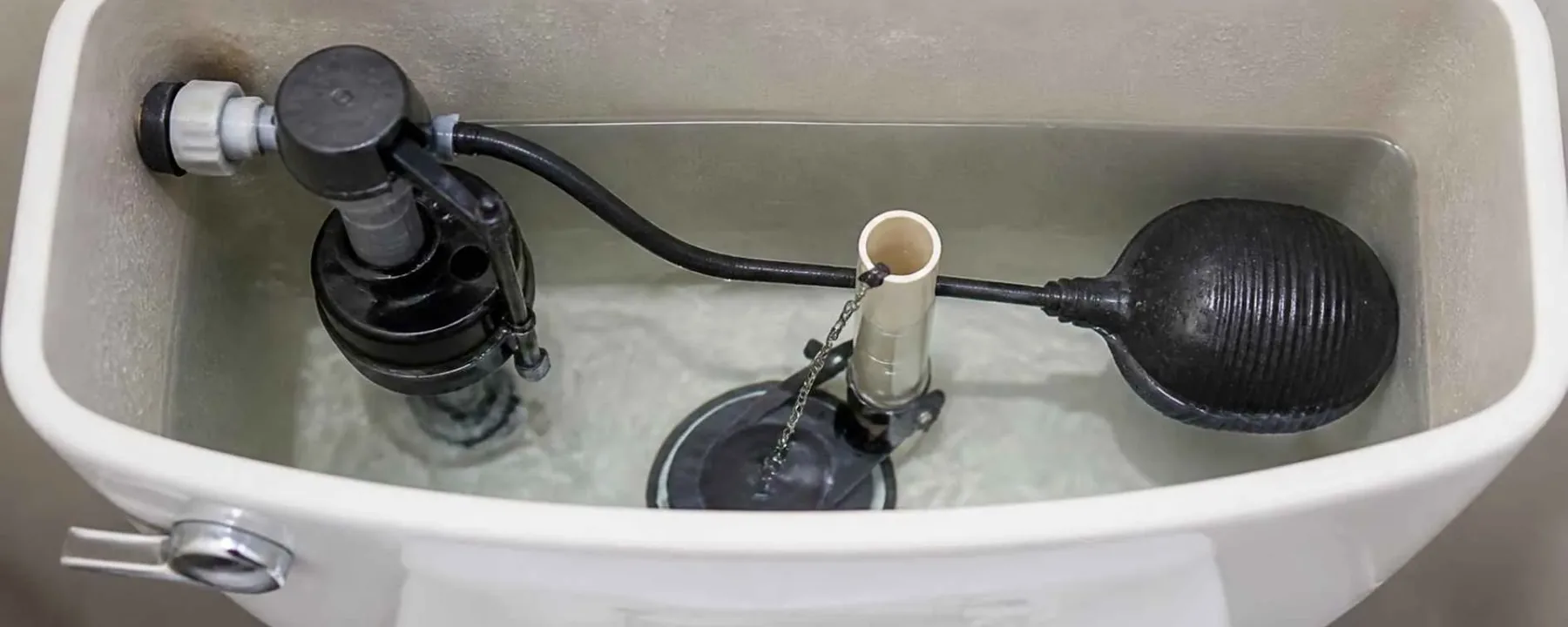
An overflowing toilet is an emergency the moment water reaches the floor, and our 24/7 line is open for it right now. In the first two minutes, reach behind the bowl and turn the supply valve clockwise until it stops. Then lift the tank lid and press the rubber flapper down into its seat so the tank cannot empty into a full bowl.
Do not flush again, even if the bowl seems to be draining. A partial clog can send the next gallon or two straight onto the tile. Call (215) 714-6692 from a dry spot and a dispatcher will tell you what can wait for the plumber.
Toilet repair covers everything from a worn fill valve to a cracked bowl, and installation means setting a new fixture on a sound flange with a tight seal. Most calls start with one of the few causes in the table below.
Toilet overflowing onto the bathroom floor: the first two minutes
These actions work on almost any residential toilet, and none of them needs a tool.
Close the supply valve
It is the small oval or round handle on the wall or floor behind the toilet. Turn it clockwise by hand. If it will not move, do not force it, and tell the dispatcher so.
Stop the flapper
Lift the tank lid and push the rubber flapper down over the drain hole at the bottom of the tank. Holding it closed keeps tank water out of the bowl.
Hold off on the plunger
Plunging a bowl that is already full to the rim splashes water over the edge. Wait until the level drops, or let the plumber handle it.
Watch the other drains
If the tub gurgles or the sink backs up when the toilet struggles, the clog is past the toilet. Stop all water use and say so on the phone.
Protect the floor and the power
Lay towels at the base, lift rugs, and keep power strips and cords out of the water. A wet subfloor is far worse than a wet bowl.
Call and stay reachable
Give the address, say whether water is still rising, and leave a number that will pick up. That lets the right plumber arrive with the right parts.
Toilet overflowing right now?
Close the valve behind the bowl, then call. A dispatcher is on the line at any hour.
Reading the symptom: likely cause and usual fix
Most toilet problems announce themselves in a way that points to one part. This table shows the common matches.
| Symptom | Likely cause | Usual fix |
|---|---|---|
| Bowl fills and will not drain | A clog in the trap or the bend below it | Closet auger, then a flush test |
| Water pools at the base after a flush | A failed wax ring or loose closet bolts | Pull the toilet, inspect the flange, reset on a new seal |
| Water runs into the bowl all day | A worn flapper, a short chain or a failing fill valve | Replace the flapper or fill valve |
| Puddle under the tank | A cracked supply line, a bad tank-to-bowl gasket or condensation | Replace the line or gasket, or insulate against sweating |
| Weak flush with a slow swirl | Clogged rim jets or low water in the tank | Clear the jets and reset the water level |
| Toilet rocks side to side | Loose bolts, an uneven flange or a soft floor | Shim or reset, and repair the floor if it is soft |
| The same toilet clogs again within days | A clog deeper in the line, see drain cleaning | Clear the line, then find out why it keeps filling |
A symptom can have more than one cause, so the plumber confirms before replacing anything.
Wax rings, flanges and the floor under the toilet
The wax ring is a ring of wax, or a wax-free gasket, that seals the toilet outlet to the closet flange. When it fails, water seeps out at the base after a flush, the floor feels soft or stained, or a sewer smell appears. Even a slight rock breaks the seal, so a loose toilet often becomes a leaking one.
The flange is the part people forget. It bolts to the floor and holds the toilet in place, and it may be cast iron, brass, PVC or plastic. A flange that is cracked, rusted at the bolt slots or sitting below the finished floor will not hold a new seal, and the plumber may add a repair ring or an extension.
Abington's homes are old. The median house was built in 1956 and about 61 percent predate 1960, according to Census ACS estimates for 2020 to 2024. In a house that age, the flange and the pipe beneath it may be original cast iron, and the floor around a toilet that has leaked for months may be soft. Ask the plumber to press on the subfloor before the new toilet goes down.
A toilet that runs or leaks without overflowing
A toilet that hisses or refills on its own is usually losing water past the flapper into the bowl, and the fill valve keeps topping up the tank. You can test it by putting a few drops of food coloring in the tank and waiting 15 minutes, since color in the bowl means the flapper is leaking. Flappers, chains and fill valves are inexpensive parts, and many people replace them with a screwdriver and a wrench.
Call a plumber when the tank is cracked, when the shutoff valve will not close, or when the leak is at the base rather than the tank. A running toilet can waste a lot of water over a day, and Aqua's water-leak guidance suggests reading your meter across a two-hour window with no use to confirm a hidden leak. Our leak detection page explains how that check works.
Putting in a new toilet: what the plumber checks first
A replacement toilet only works if it fits the room and the pipe beneath it. These checks happen before the old unit comes out.
Rough-in distance
The rough-in is the measurement from the finished wall to the center of the flange. Twelve inches is the most common size, but 10 and 14 inch layouts exist, and a toilet built for one will not sit right on another.
Flange condition
The plumber looks for cracks, rust and height. A flange that sits too low or too high changes the seal, so it may be raised, repaired or replaced before the toilet is set.
Supply line and shutoff valve
An old stop valve that has not moved in years may leak when turned, so it is often replaced with a quarter-turn valve and a new braided line. If it will not close, see our faucet and valve repair page.
Setting and sealing
The new toilet goes down on a fresh seal, level in both directions. The bolts are tightened a little at a time, since overtightening can crack the porcelain.
Flush test
Several flushes with the base and the line watched closely tell the plumber if the seal and the connections hold. A toilet that cannot wait can often be done same-day when available.
What decides the price of a toilet repair or replacement
A fair price depends on what the plumber finds when the toilet is opened. You get a clear price before work starts, and these are the factors that move it.
Sudden overflow damage may be covered by a homeowner policy while slow leaks at the base usually are not, so photograph the floor and call your insurer early. Want a clear number for your bathroom? Call (215) 714-6692.
Call for your priceWhy Abington Township asks residents to stop flushing wipes
The Township owns and operates the sanitary sewer system and treatment plant on Fitzwatertown Road. Its wastewater guidance lists wipes among the leading causes of blockages and tells residents to stop flushing them, along with the fats, roots, oil and grease it calls FROG. For you this is practical, because a toilet that clogs after wipes is a plumbing job, and a wipe-packed lateral can keep returning until the wipes stop.
When repeated clogging points to the main line
A single clog is a toilet problem. A toilet that clogs again within weeks, a tub that gurgles when the toilet flushes, or a basement floor drain that bubbles all point farther down the pipe. In those cases the plumber clears the line instead of the bowl, and drain cleaning or sewer line cleaning is the right fix.
The Township's own FAQ says that if only your drains are slow, the problem is likely inside your pipes. If several houses on the street are backing up, call the Township's wastewater line at 215-884-8329, which it lists as the emergency number for sewer backups. Either way, call us as well for a plumber on your side of the lateral.
We dispatch for Abington and nearby towns, including Glenside and Jenkintown. Nights and weekends get the same dispatch line as weekday mornings.
Permits and a registered plumber
Replacing a water closet is among the residential work that Abington Township's code can require a permit for. Plumbing permit applications come from a master plumber registered with the Township. Ask the plumber to confirm with Community Development, which administers the plumbing ordinance, before a full replacement.
Toilet questions from Abington homeowners
Yes. The dispatch line is open 24 hours a day, every day, including holidays. Call, say whether the toilet is overflowing or leaking and give your address, and we will tell you how to stop the water while a plumber is sent.
A running toilet, a worn flapper or a leaking supply line is usually a repair. A cracked bowl or tank, repeated clogs from a poor flush design or a fixture that rocks on a damaged floor usually points toward replacement. The plumber will show you what failed before any work begins.
The usual cause is a flapper that no longer seals, a chain that is too short or tangled, or a fill valve that will not shut off. Water leaks from the tank into the bowl and the fill valve keeps topping it up. Replacing the worn part usually ends it.
It is often a failed wax ring, loose closet bolts or a cracked flange. Water can also come from a tank that sweats or a supply line that leaks. Dry the floor, flush once and watch where the water first appears to narrow the cause.
Many homeowners replace a fill valve with basic tools, and it is a fair weekend job. A wax ring means lifting a heavy toilet, checking the flange and resetting it level, and a poor reset leaks into the floor. Call a plumber if the flange is damaged or the floor is soft.
Measure from the finished wall to the center of the floor bolts. That rough-in distance is most often 12 inches, but 10 and 14 inch layouts exist. The plumber also checks the flange, the supply valve and the space around the bowl before ordering the fixture.
One clog usually has a simple cause. A toilet that clogs again within weeks may have a line clog downstream, a partial blockage in the main, or too many wipes. Abington Township asks residents to stop flushing wipes, so start there and call if the problem returns.
The Township's code lists replacing a water closet among residential work that can need a plumbing permit. Applications come from a master plumber registered with the Township. Your plumber can confirm the details with Community Development before the job.