
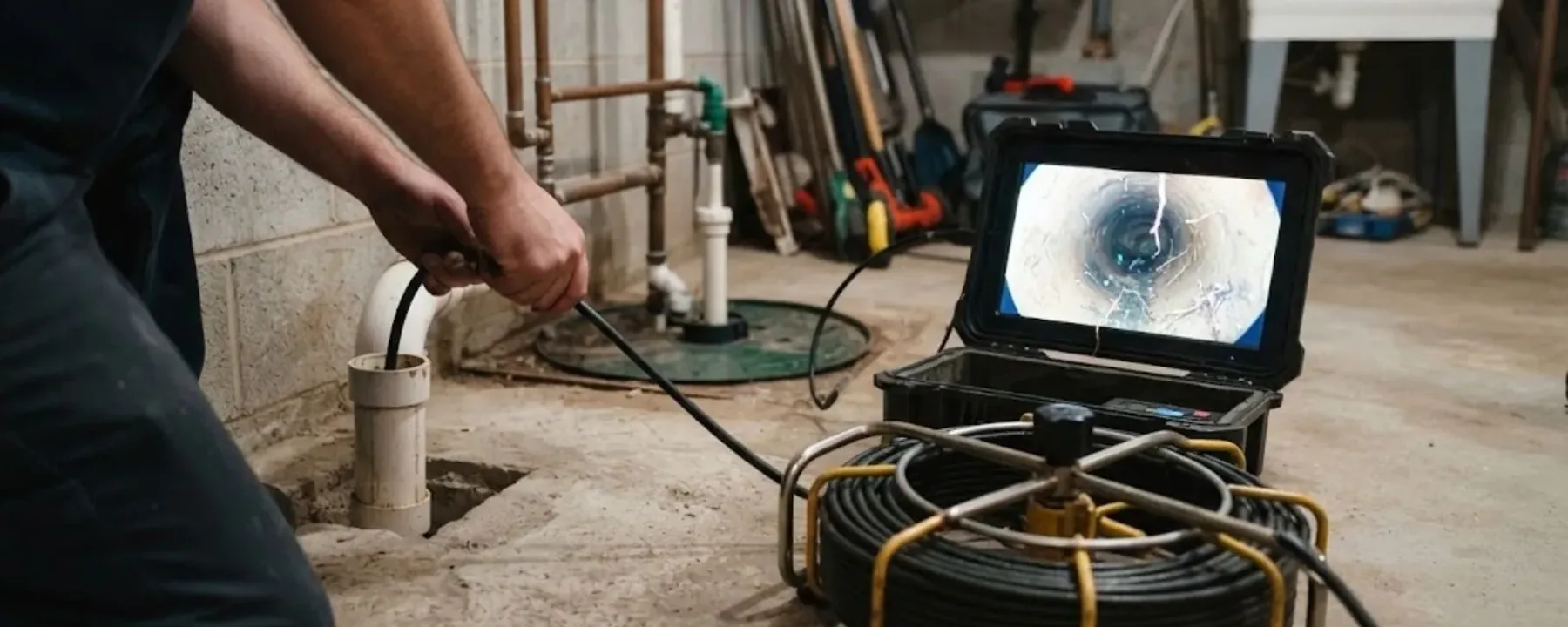
A sewer camera inspection sends a waterproof camera through the pipe that carries wastewater from your house to the sewer main, and a plumber watches the picture live. The screen usually shows something specific, such as joints that have slipped out of line, tree roots pushing through a seam, a low spot that holds water, hairline cracks or flaking scale inside old cast iron.
The inspection is a diagnosis, not a repair. It tells you whether the line needs cleaning, a spot fix, a liner or a full replacement, or whether it is fine as it is. Call (215) 714-6692 any hour to book, and ask about same-day times.
What the camera sees inside a house sewer line
Offset or separated joints
Where two pieces of pipe no longer line up, debris catches on the lip and a clog forms in the same place again and again.
Root intrusion
Fine roots enter through seams and grow into a mat. A camera shows whether they are a few strands or a mass that fills the pipe.
Bellies or sags
A section that has settled holds standing water, and solids collect there. The camera shows a pool where the pipe should drain.
Cracks and breaks
Longitudinal cracks, collapsed sections and holes let soil in and wastewater out. They tend to get worse with time and ground movement.
Scale and corrosion in cast iron
Old cast iron roughens from the inside, and a layer of scale narrows the pipe until it catches paper and grease.
Grease, debris and foreign objects
Hardened grease, wipes and toys can sit in a pipe that is otherwise sound, and cleaning clears them.
When to book a camera inspection
Four situations make a camera worth the visit. In each, a picture of the line replaces a guess about something that is expensive to get wrong.
- A clog keeps coming back. If snaking or jetting works for a few weeks and then the drain slows again, something in the pipe is catching debris. The camera shows what.
- You are buying a house. A line that looks fine from the basement can be cracked or root-filled under the yard. Buyers often add a camera inspection to the checkup, and the video becomes a negotiating fact.
- You plan to finish a basement. Floor drains, a new bathroom and walls all sit on top of the line. Learning about a problem before the drywall goes up costs far less than finding it after.
- A backup just happened. A sewage backup tells you the line is blocked or failing. After the line is cleared, a camera shows whether the cause was one-time or structural.
What happens during the visit
Find a way in
The plumber looks for a cleanout, the capped fitting that gives access to the line. If there is none, a toilet can be pulled or a vent used, and the plumber will tell you what that adds.
Run the camera
A flexible cable pushes the camera down the line while it records. The plumber watches for changes in pipe material, joints, water and obstructions.
Locate trouble spots
Many cameras carry a transmitter, so the plumber can trace a problem from above ground and give you its depth and position, where the equipment allows.
Review the video together
You see what the plumber sees and hear what each finding means for your house. Ask for a copy of the recording.
Choose the next step
The plumber lays out options with a clear price before any repair work starts. Nothing needs to be decided on the spot.
Ready to see inside your sewer line?
Call to book a camera inspection. The line is open 24/7, and a dispatcher can look for a same-day time when available.
What each finding means for your next step
A camera finding points to one of five paths. This table shows how plumbers usually match what is on screen to what comes next, though your pipe may need a different answer.
| What the camera shows | Usual next step | Why |
|---|---|---|
| Clean pipe, sound joints, normal flow | Nothing to fix. Keep the recording for your records. | A clog may be in the house drains instead, see drain cleaning |
| Grease, paper, wipes or loose debris | Clean the line, often with hydro jetting or a cable | The pipe is sound, and the obstruction is the problem |
| Roots in joints but the pipe is intact | Cut the roots, then set a cleaning schedule | Roots return, so cutting is maintenance, not a cure |
| One cracked, offset or sagging section | Spot repair or a liner, see sewer line repair | Fixes the failed part without replacing the whole run |
| Widespread cracks, collapse or heavy scale | Replace the line, by trench or trenchless where possible | Patching a worn line often leads to another failure soon |
Equipment and methods vary by plumber and by site. Ask what applies to your line before you agree to a repair.
Buying or selling in Abington Township
Some municipalities require a sewer lateral test when a house sells, and some do not. We could not find a published Abington Township rule on this, so ask Abington Township's Community Development office what applies to a sale. A camera inspection is useful either way, because it shows the condition of the line whether or not anyone requires it.
Who owns what between the house and the main
Abington Township owns and runs its sanitary sewer system, including the mains and the treatment plant on Fitzwatertown Road in Roslyn. The pipe from your house to the main is your lateral, and the township says that if a blockage sits between the home and the main, you should contact a plumber. If only your own drains are slow, the problem is probably inside your pipes.
If sewage is backing up into your house right now, call the township's wastewater line at 215-884-8329, which also takes backup calls. The township can tell you whether the main is the problem. A camera then shows whether the cause is the main, your lateral or something inside the house, and the sewer line cleaning page covers clearing it.
Age, material and what to expect in older Abington streets
The median home in Abington Township was built in 1956, and about 61 percent of homes predate 1960, according to Census estimates for 2020 to 2024. Laterals from that era are often cast iron, clay or other older materials, and each fails in its own way. Cast iron scales, clay joints let roots in, and sections can settle over decades.
Homeowners in Glenside, Jenkintown and the older streets of Abington proper can ask the plumber what material the camera found and how much of the line it could reach. The answer tells you how much life is left, and a worn line is a good reason to plan the work before an emergency forces it.
What decides the price of a sewer camera inspection
A routine look at a short, easy-to-reach line is a simple visit. Some jobs are more involved. You get a clear price before work starts, and these factors move it.
Insurance usually does not pay for a routine inspection, though it may be worth asking your insurer if a sewage backup already caused damage. Want a clear number for your house? Call (215) 714-6692.
Call for your priceSewer camera inspection questions from Abington homeowners
It shows the inside of the pipe from the cleanout toward the street, including cracks, offset joints, roots, low spots that hold water, grease and scale in cast iron. The plumber watches live and can usually record the video.
It is a good idea, especially for older houses. A line can look fine in the basement and still be cracked or root-filled outside. The video gives you facts to use in negotiation, and it costs far less than a surprise replacement.
We could not find a published township rule on this. Ask Abington Township's Community Development office what applies to a sale, and have the camera inspection done either way so you know the line's condition.
A cleanout is the easiest way in. Without one, a plumber may pull a toilet or use a roof vent, which takes longer. If your house has no cleanout, ask about adding one, since it makes every future cleaning and inspection easier.
It depends on the length of the line, the access and what the camera finds. A simple case can take a short visit, while a line that needs cleaning first takes longer. The plumber can tell you more once they see the access point.
Many cameras carry a transmitter, so the plumber can trace the signal above ground and mark the spot. Depth and position readings are most useful before digging. Not every plumber has locating equipment, so ask when you book.
Abington Township owns the sewer main, and the pipe from the house to the main is the lateral. The township directs homeowners to a plumber for blockages between the home and the main. Ask the township about your specific case.
The plumber explains the finding on screen and gives your options, from cleaning to a spot repair, a liner or replacement. You get a clear price before work starts, and you can take the video to another plumber for a second opinion.