
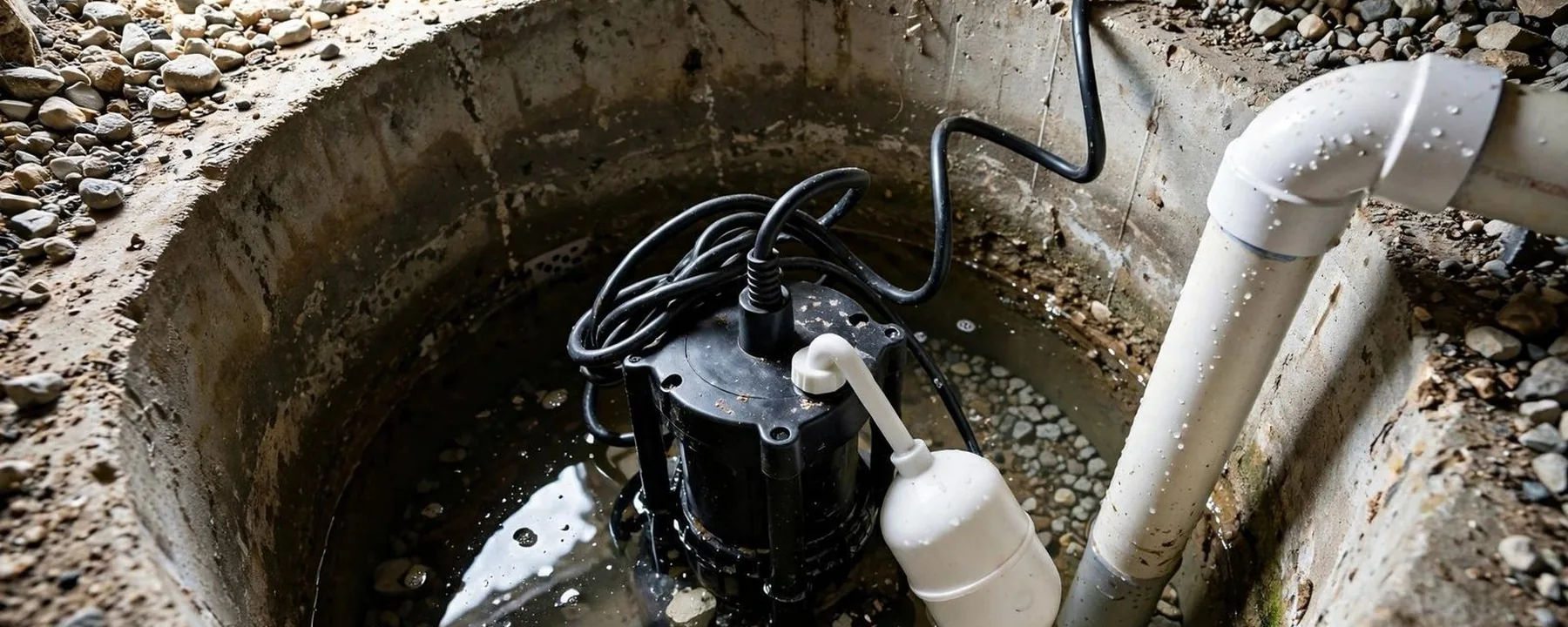
Replacing a pump in a working pit is often a half-day job, depending on the pipe and the check valve. A first-time install means breaking the basement slab, digging the pit and running a discharge line outdoors, and that can stretch to a full day or more. We cannot promise a duration before seeing the basement.
In Abington Township, the water has to be piped outside the house and never into the sanitary sewer. That rule shapes the job as much as the pump does.
What happens on install day, in order
The order below is for a new pit. A swap into an existing pit skips the first few steps.
Walk the basement and pick the low point
The plumber looks at where water collects, where the floor slopes and where a discharge pipe can exit. The best pit location is the lowest corner that still has a clear path to an outside wall.
Cut the slab and dig the pit
A saw opens a square in the concrete, and the plumber digs out soil and stone. Dust and noise are part of this step, and it can be the slowest part of the day.
Set the basin
A plastic or fiberglass basin goes in, with gravel around it and a lid on top. The top should sit flush with the floor so nothing catches.
Install the pump and check valve
The pump sits on a firm base, with a float switch that has room to rise and fall. A check valve on the discharge keeps water from flowing back into the pit.
Run the discharge line outside
A rigid pipe leaves through the rim joist or wall, and ends at a point that sends water away from the foundation. Township guidance says the line must be permanently piped out of the house, to the yard, a seepage pit or a storm sewer.
Patch the slab and test
The concrete around the basin gets patched, and the plumber pours water into the pit to watch the float lift, the pump run and the water exit. A good test checks that the pump turns off when the water drops.
What stretches or shortens the job
| Situation | Effect on time | Why |
|---|---|---|
| Replacing a pump in an existing pit | Often the shortest job | The pit, basin and discharge are already in place |
| New pit in a poured slab | Longer, often most of a day | Concrete has to be cut, dug and patched |
| Discharge line must cross a finished wall | Adds time | Access cuts and repairs come before the pipe |
| Existing discharge goes to the sanitary sewer | Adds time | It must be disconnected and re-piped outdoors |
| High groundwater in the pit | Adds time | The plumber has to pump the hole while working |
| Battery backup or a second pump | Adds time | Extra wiring, a second discharge or a larger basin |
These are patterns, not promises. A plumber can only estimate once the basement has been seen.
Basement taking on water now?
Call the 24/7 line. A dispatcher can tell you whether a same-day visit is open.
Abington note: where the water has to go
Abington Township's wastewater page says sump pumps must be permanently piped out of the house to the yard, a seepage pit or a storm sewer. The township code also bars sump pump and downspout water from the sanitary sewer, and calls for rigid piping. If an old pump drains into a floor drain or a basement sewer line, the plumber has to re-route it, and that adds time.
The township also says that a connection that sends sump water to the sanitary sewer is illegal, and the code allows fines for violations. For you, that means asking the installer where the discharge will end, and having the answer before work begins. A plumber who plans to tie it into a drain is not following the rule.
If the discharge point is near a property line or will add paved area, the township's stormwater rules may apply. The Engineering office handles those questions. No sump pump permit shows up on the township's permit list, but ask Community Development to be sure about your plan.
Source type: Abington Township wastewater page, township sewer ordinance and stormwater FAQ. Permit questions go to Community Development or Engineering.
Planned install versus emergency replacement
Timing feels different when the basement already has water on the floor.
A planned install
- Time to pick the pit location and discharge route
- Room to schedule concrete work and cleanup
- Chance to add a battery backup or alarm
- A dry basement while the pit is cut
- Choice of a day with dry weather
An emergency replacement
- Water to pump out before work can start
- A quick swap of the pump in the existing pit
- Little time to redesign the discharge
- Cleanup and drying handled separately
- Larger upgrades saved for a later visit
Why a sump pump matters in an older Abington basement
The township's own planning documents say flooding is the most common natural hazard in Montgomery County and has been a serious problem in Abington. They name floods in 1931, 1964, 1996 and 2001 in the creek basins that touch the township, and they place the Sandy Run floodplain through Crestmont and Roslyn. Abington holds the headwaters of three watersheds, so heavy rain moves through quickly.
None of that tells you whether your basement floods. It does suggest that if your house sits near one of those creeks, a pump is worth thinking about before the next storm, not during it.
If your home is closer to Willow Grove, the Sandy Run side is the one to ask your installer about. A basement that stays damp but never floods may call for basement waterproofing or drainage work, not just a pump. We also dispatch to Elkins Park, where the same questions about discharge and older basements come up.
What to have ready before the plumber arrives
A little prep shortens the day.
- Clear a path Move boxes and furniture from the corner where the pit will go and from the route to the door.
- Know your electrical outlet The pump needs a grounded outlet, and a protected circuit is a better choice. Point out where it is.
- Note where water collects Tell the plumber which corner stays wet after rain and which stays dry.
- Mention any past water If the basement flooded after a storm or a sewer backup, say so. It may add a backwater valve to the conversation.
- Ask about the discharge exit Walk the outside wall with the plumber and agree where the pipe will end.
Backwater valves are a separate question
A sump pump handles groundwater, not sewage. The township code requires a backwater valve where basement plumbing is installed or altered, or where a basement could flood with sewage if the public sewer surcharges. Ask your plumber whether your basement fixtures need one. For existing pump trouble, see sump pump repair.
What decides the price of a sump pump install
The price comes from the work, not the pump alone. You get a clear price before work starts.
A homeowner policy may not cover sump pump failure or water backup without an added rider, so ask your insurer. To talk through your basement, call (215) 714-6692.
Call for your priceSump pump install questions from Abington homeowners
Swapping a pump in an existing pit is often a few hours. A new pit in a poured basement slab usually takes longer, often most of a day. The exact time depends on your slab, the discharge route and how much water is in the pit.
Township guidance says sump pumps must be permanently piped out of the house to the yard, a seepage pit or a storm sewer. Connecting a sump pump to the sanitary sewer is illegal. The discharge should also send water away from your foundation.
No. Township code bars sump pump discharge from the sanitary sewer, and floor drains lead there. An old pump tied to a drain should be re-piped outdoors with a rigid line. Ask the installer where the line will end before work starts.
No sump pump permit appears on the township's permit list, but we did not find a rule that settles every case. A discharge near a property line or new paving may trigger stormwater rules. Ask Community Development or Engineering before you start.
A standard electric pump stops when the power fails, which often happens during storms. A battery backup can keep it running for a limited time. Ask the plumber how long a backup would last for your pit and pump.
The township's planning documents place the Sandy Run floodplain through Crestmont and Roslyn, the Tookany creek floodplain along the Glenside and Jenkintown border, and a Pennypack floodplain around Meadowbrook. Check your own address on FEMA's flood map to see your exact zone.
Same-day appointments are offered when available, and an emergency swap into an existing pit is more likely to fit than a new pit. Call and describe your basement. The dispatcher will tell you honestly what can happen today.