
Yes. Coconut oil is a fat, and it turns solid or semi-solid at around normal room temperature. Poured down a sink, it can cool inside the pipe, coat the walls and trap food bits, soap and hair. Hot water only moves it farther along before it sets.
The better move is to let it cool in the pan or a jar, wipe the pan with a paper towel and put the waste in the trash. If a kitchen drain is already slow, call (215) 714-6692 before the clog becomes a backup.
What to do with coconut oil and what to skip
This is the habit change that does the most for a kitchen drain. It costs nothing and takes seconds.
Do this
- Wipe oily pans and dishes with a paper towel before washing
- Let used oil cool and solidify in a jar or can, then put it in the trash
- Scrape cooled fat into the trash, not the disposal
- Wash cookware with dish soap after the oil is gone
- Ask the township what to do with larger amounts of used fat
Skip this
- Pouring melted oil down the sink and chasing it with hot water
- Running the disposal to grind fat so it goes down
- Rinsing greasy pots with cold water that sets the fat
- Flushing oily wipes or paper towels
- Relying on harsh chemical openers to dissolve a fat clog
Why a liquid in the pan becomes a plug in the pipe
Coconut oil melts at a temperature in the mid 70s Fahrenheit, which is only a little above a comfortable house. Drain lines run through cooler spots such as basement walls and slab floors, and the water carrying the oil cools quickly. The oil then sets in a pale, waxy layer on the inside of the pipe.
That layer is sticky. Each later wash adds soap scum, coffee grounds and food bits, and the opening narrows over weeks or months. The result is often a sink that drains a little slower each time, then stops all at once.
Oils that stay liquid in the fridge are not safe either, because they mix with food waste and coat pipe walls. Coconut oil is just the easiest to picture, since you can see it turn white in the jar on the counter.
What Abington Township says about cooking oil and grease
The township's wastewater page lists kitchen grease and cooking oil among the common causes of sewer backups, and it asks residents to keep grease out of drains. The township calls its guidance FROG, for fats, roots, oil and grease. Its advice is to wipe oil-coated cookware with a paper towel and put that in the trash before washing, and to use the garbage disposal less.
None of these pages name coconut oil specifically. A fat that sets at room temperature falls under the same warning, so treat it like any other cooking oil.
Township code also bars waste with more than 100 parts per million by weight of fat, oil or grease from the sewer. That limit exists because the township owns and runs the sanitary sewer, and grease that gets past your trap can build up in the main. If you have a larger amount of used fat, ask Abington Public Works at 267-536-1036 what to do with it, and do not pour it down the drain.
If sewage comes back into your fixtures when no one is using water, the township's wastewater page gives 215-884-8329 as its emergency number. If only your own drains back up, the page says the problem is likely in your pipes and a plumber should inspect and clear them.
Source type: Abington Township wastewater page and township code of ordinances, Abington Public Works contact page
Common kitchen fats and what they do in a drain
The risk is the same across all of them, but the way they set is different. This table shows what you are likely to see.
| Fat or oil | How it behaves when cool | What to do with it |
|---|---|---|
| Coconut oil | Turns solid or semi-solid at about room temperature | Cool in a jar, scrape, and put in the trash |
| Bacon grease | Sets into a hard white layer | Pour into a can, let it harden, and throw it out |
| Butter and ghee | Firms up quickly and clings to pipe walls | Wipe the pan with a paper towel first |
| Olive or vegetable oil | Stays liquid but coats pipes and mixes with food waste | Collect in a sealed container for the trash |
| Salad dressing and sauces | Contains oil that separates and clings to pipe walls | Scrape into the trash before rinsing |
Behavior varies with kitchen temperature and pipe material. The habit is the same for every fat.
Kitchen sink backing up?
Stop running water into it and call. A dispatcher will tell you whether same-day service is available.
Signs coconut oil or other fat is already building up
A sink that drains slower each week
A gradual slowdown often points to a coating that has narrowed the pipe. A sudden stop is a different problem.
Gurgling after a dishwasher cycle
Air and water fighting through a narrowed line can make the sink gurgle when the dishwasher drains.
A smell that returns after cleaning
Food trapped on a greasy pipe wall keeps rotting. The smell comes back because the source is still in the pipe.
A clog that returns within weeks
If a cable clears the sink and it clogs again soon after, fat may be left on the pipe walls. A camera can show it.
More than one fixture backing up
If the basement floor drain, laundry sink or tub also gurgles or backs up, the blockage may be in the main line.
If you already poured it down the drain
A single pour is unlikely to cause a clog by itself. A habit is what builds one.
Stop adding more
Do not run the disposal or add more grease. Wipe pans with a paper towel from now on.
Flush with plenty of water
Run hot tap water for a minute or two with dish soap. This may move a small amount along, but it does not clear a thick coating.
Watch the drain for a week
If water starts to linger or gurgle, the oil may have set farther down the line.
Skip the harsh chemicals
Chemical openers can damage older pipes and do not always cut through a thick fat layer. They also create a hazard for the plumber who comes next.
Call for a cleaning if it slows
A plumber can clear the line with a cable or a jet. See drain cleaning for the usual methods.
When a fat clog needs a plumber
A plunger and a little patience clear many sink clogs. A fat clog is different, because the cooled grease coats the pipe wall and a cable can punch a hole through it without removing it. The drain looks open for a few weeks, then the narrowing resumes.
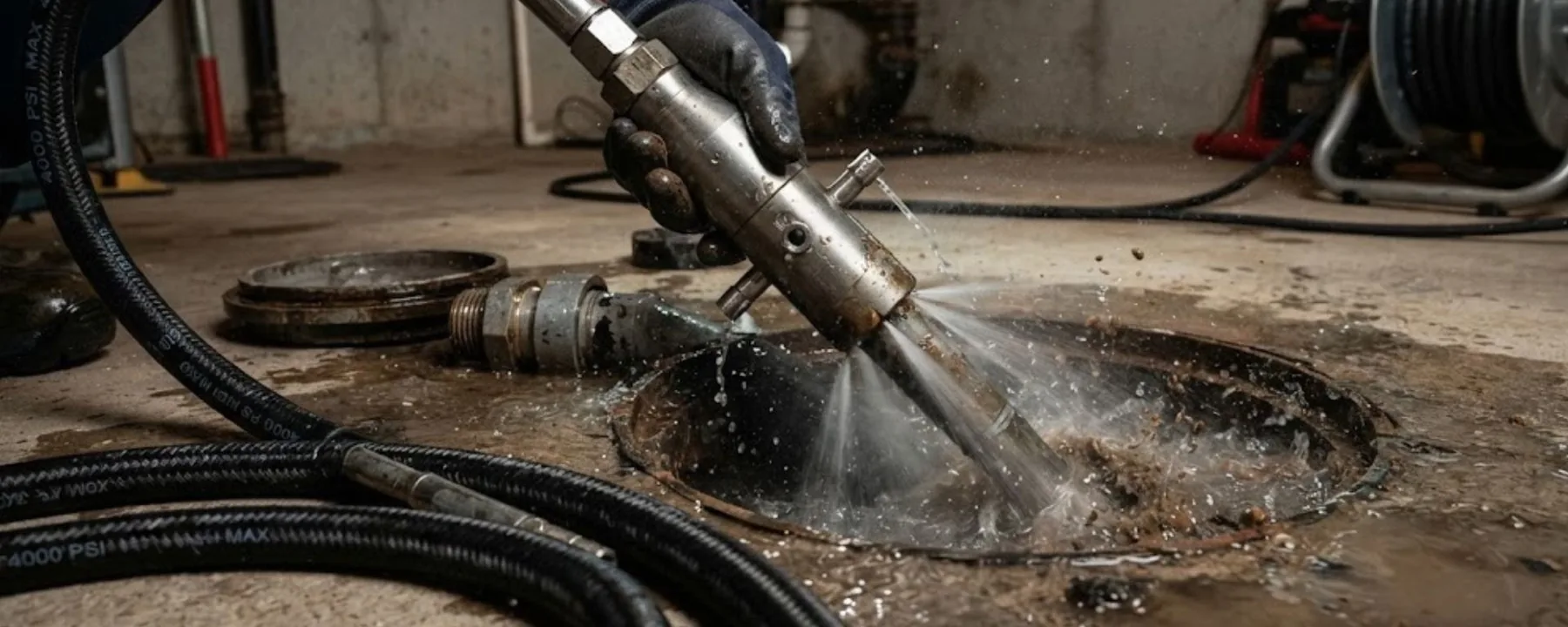
That is when hydro jetting can help, since a jet of water scrubs the wall and flushes the film down. A camera inspection first shows how much fat is on the pipe and whether the problem is grease or something else, such as roots or a broken section. A main that keeps backing up may call for sewer line cleaning.
In older homes around Wyncote and Jenkintown, drain lines are often cast iron or clay, and rough interior walls can hold grease more easily than new pipe. Ask your plumber what the pipe is made of and how it looks on camera, so you know whether cleaning is enough or whether a repair is coming.
Coconut oil and drain questions from Abington homeowners
Hot water melts it for a moment, but the oil cools again farther down the pipe and sets on the walls. That moves the problem instead of solving it. A paper towel and the trash are the reliable option.
No. The disposal grinds food but does not remove fat, and the oil still ends up in the trap and the drain line. Abington Township also asks residents to use the disposal less and keep grease out of drains.
The township does not name coconut oil on the pages we checked. It does list kitchen grease and cooking oil as causes of sewer backups and limits fat, oil and grease in its code, and coconut oil is a cooking fat.
Let it cool and harden in a sealed jar or can and put it in the trash. For larger amounts, ask Abington Public Works at 267-536-1036 what they accept. Do not pour it down the drain or the toilet.
Grease tends to cause slowdowns that build over weeks, with a smell. A sudden full stop can mean a solid object. A camera inspection shows the difference and prevents guesswork.
If only your own fixtures back up, the township says the cause is likely in your pipes and a plumber should clear them. If sewage rises when no one is using water or neighbors have backups, call the township at 215-884-8329.
Call when a sink drains slowly after a cable or plunger cleared it, when the smell returns, or when more than one fixture is affected. A fat coating needs to be removed, not just poked through.