
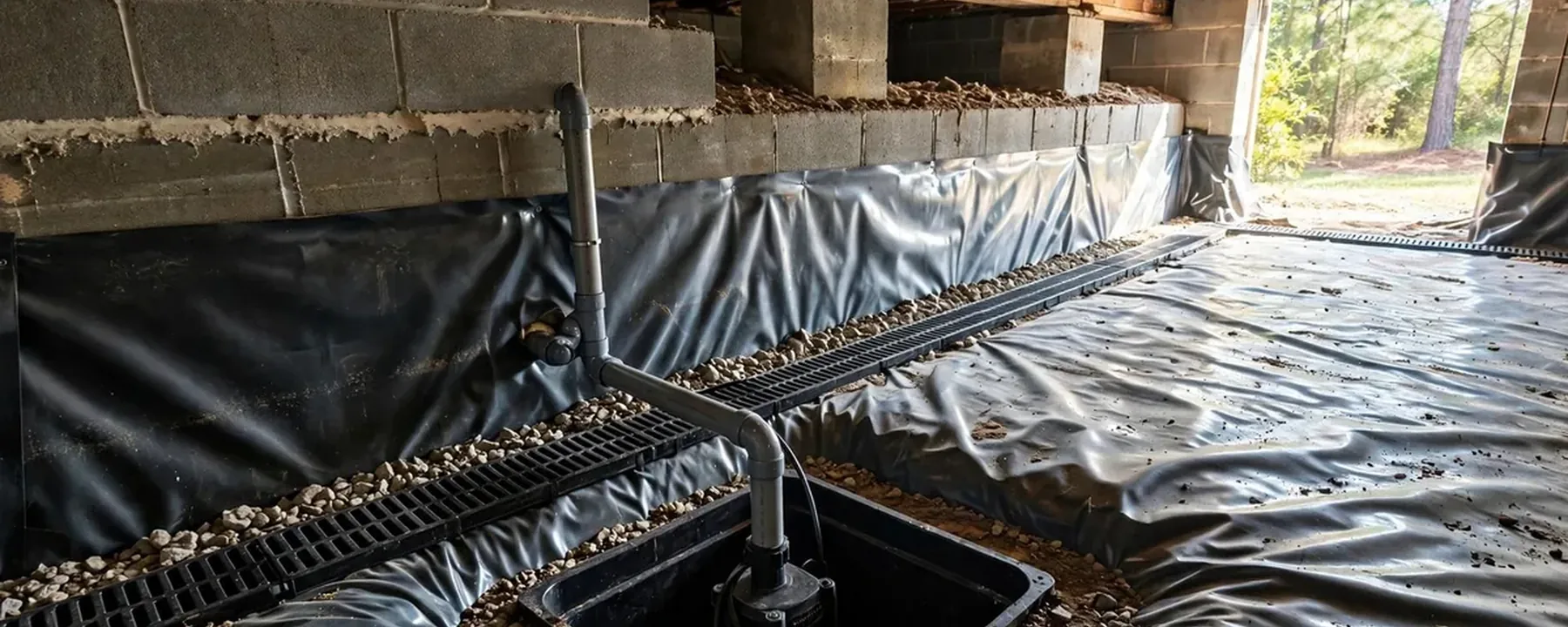
Yes, you can do a good share of basement waterproofing yourself, and nearly all of it happens outside. Clean the gutters, send every downspout several feet away from the foundation, and make the soil next to the wall fall away from the house. Those three jobs handle the roof and surface water behind many damp basements, and none of them needs a plumber.
What a homeowner cannot fix with a weekend and a tube of sealant is groundwater pushing in under pressure. If water shows up at the floor-wall joint, rises through the slab, or comes back after you have fixed the outside, the cause is below ground. That is when drainage and a sump pump come into the picture, and when you should call.
Five jobs you can finish on a free weekend
Start at the roof and work down. Each job below costs little compared with the damage it prevents, and each one narrows down where the water is really coming from.
- Clean the gutters. Leaves and shingle grit make roof water spill over the edge and run down the foundation. Clear them in late spring and again in late fall, then run a hose and watch that the water reaches the downspout.
- Lengthen the downspouts. Roof water should land several feet from the house, not at the footing. A solid extension pipe or a splash block onto sloped lawn does the job. Keep the end in the yard and never tie it into a basement drain.
- Rebuild the grade. Soil beside the foundation should fall away from the wall, not toward it. Pack fill into low spots, tamp it down, and check after the next hard rain that nothing ponds against the house.
- Clear the window wells. Pull out leaves and debris, make sure the drain at the bottom is open, and think about a clear cover so rain does not fill the well and push against the glass.
- Run a dehumidifier. It pulls moisture from the air, not from the wall. That helps with a musty smell and with sweating on cold pipes, but it will not stop a wall from leaking. Run its hose to a drain or empty the bucket daily.
Reading what the wall is telling you
Before you buy anything, look at where and when the basement gets wet. The pattern points to the cause, and the cause decides whether you or a plumber should handle it.
| What you see | Likely cause | DIY or call |
|---|---|---|
| Damp patch on one wall after rain | Roof or surface water collecting on that side of the house | DIY first. Fix the gutter, downspout and grade on that side, then watch the next storm |
| White chalky powder on block or concrete | Moisture moving through the masonry and leaving mineral salts behind | Brush it off and track it. If it keeps returning, get a professional opinion |
| Seepage along the floor-wall joint | Groundwater pressure from below or beside the slab | Call. Surface sealer rarely holds against pressure |
| Wet floor with no rain for days | A supply or drain pipe leak rather than groundwater | Call, and see leak detection for how a plumber finds it |
| Musty smell but no visible water | High humidity, often from a dryer vent or poor airflow | DIY. Dehumidifier, ventilation and a check of the dryer duct |
| Water rising from a floor drain | Sewer backup, not groundwater | Stop and call. Do not run water, and see the township note below |
A foil test helps tell condensation from a leak. Tape a square of foil to the wall for a day. Moisture on the room side of the foil is condensation, and moisture behind it is coming through the wall.
Abington basement rules to know before you dig or drain
Abington's township code bars downspout, sump pump and groundwater discharge from the sanitary sewer, and the township's wastewater page says sump pumps must be permanently piped out of the house to the yard, a seepage pit or a storm sewer. For you, that means a downspout extension or pump line never goes into a floor drain or the house sewer line. Rain that gets into the sewer overloads it, and the code provides for fines.
Adding hard surface such as a shed, a wider driveway or an addition can trigger the township's stormwater rules, even at small sizes. Before you regrade a yard or put in a drywell or rain garden, ask Township Engineering at 267-536-1018 whether a stormwater permit applies. A short call is cheaper than tearing out work.
The township's long-range plan calls flooding the most common natural hazard in Montgomery County and names the Tookany, Pennypack and Sandy Run creek systems as Abington's three watersheds. If your house sits near one of those creeks, look up your address on FEMA's flood map service at msc.fema.gov. A flood-zone house is a stronger candidate for professional drainage than for a DIY patch.
The code also requires a backwater valve where basement fixtures are installed or altered, so ask your plumber about one before you add a basement bathroom.
Source type: Abington Township wastewater page, code of ordinances and Engineering stormwater FAQ, the township long-range plan, and FEMA's public flood map service
Water coming up through the floor?
Stop DIY patching and call. A dispatcher answers at any hour and can tell you whether a same-day visit is available.
Where the do-it-yourself line sits
A fair rule is to fix water that comes from above and outside yourself, and to hand over water that comes from below and inside.
Reasonable to try yourself
- Cleaning gutters and adding downspout extensions
- Regrading soil away from the foundation
- Clearing and covering window wells
- Patching hairline cracks with a product made for the job
- Running a dehumidifier and sealing the dryer vent
Leave to a pro
- Seepage at the floor-wall joint or through the slab
- Installing or replacing a sump pump and its discharge line
- Interior drain tile or French drain work
- Any connection to the sewer line or a floor drain
- Water that returns after the outside fixes are done
Why paint-on sealers disappoint
Masonry sealers and waterproofing paint work on the surface of the wall. They can slow light dampness, but water pressing from outside often pushes the coating off the block. A sealed inside face can also trap moisture in the wall, where it keeps working on the masonry.
If you try one, read what the label actually claims, test a small patch first, and judge it after a heavy rain rather than a dry week. Do not paint over a wall that is actively seeping. Fix the water source first, then decide whether a coating is still needed.
Test for radon around any basement project
Pennsylvania's Department of Environmental Protection says about 40 percent of the state's homes test above the EPA action level of 4.0 pCi/L, and it advises testing every home. Sealing a slab or changing basement airflow can change radon readings, so test before and after the work. DEP keeps a list of state-certified mitigation installers if a reading comes back high.
When the problem is a pump, a pipe or a flood-prone block
A basement that floods during storms often needs a working pump and a drain path rather than more caulk. Our sump pump repair page explains what a failing pump sounds and looks like, and the basement waterproofing page covers where a plumber's scope ends and a waterproofing contractor's begins.
Flood geography varies block to block. The township plan places the Tookany floodplain in Glenside along the Jenkintown boundary and the Sandy Run floodplain running from Roy Chester Park in Willow Grove through Crestmont and Roslyn. If you live in Glenside or Willow Grove, ask a plumber how your pump and discharge line would handle a long rain, since our dispatchers serve both towns around the clock.
Basement waterproofing questions from Abington homeowners
You can handle the outside causes yourself, including gutters, downspout extensions, grading and window wells. You should not expect to fix groundwater pressure or seepage through the slab with a DIY product. When water returns after the outside work, call a plumber.
No. A dehumidifier lowers moisture in the air, which reduces musty smells and condensation on cold pipes. It does nothing to stop liquid water coming through a wall or floor, so use it as a helper and not as the fix.
No. Township code bars downspout and sump pump discharge from the sanitary sewer, and the township says sump pumps must be piped out of the house to the yard, a seepage pit or a storm sewer. Direct downspouts onto the lawn, away from the foundation.
Tape a square of foil to the wall and leave it for a day. If the room-facing side is wet, it is condensation. If the wall side is wet, moisture is coming through the wall, and a damp spot that grows after rain points to outside water.
Possibly. The township regulates added hard surface and has stormwater permits for seepage pits and rain gardens. Call Township Engineering at 267-536-1018 before you start, and ask your plumber whether any pipe work needs a plumbing permit.
Call when water seeps at the floor-wall joint, rises from a floor drain, appears with no rain, or returns after you have fixed the gutters and grade. Those signs point to groundwater pressure, a pipe leak or a sewer problem, and they are not surface-sealer jobs.