
Baking soda and vinegar can help with a light, greasy film in a kitchen or bathroom drain. The fizz loosens a little residue and takes the edge off a smell. It will not break up hair, a wad of wipes, a grease plug or tree roots, which cause most clogs that keep coming back.
Try it once if you like, then switch to a hand tool. If the drain stays slow after one honest try, the blockage is probably farther down the line than a kitchen-cabinet mix can reach.
What the fizz does and what it leaves behind
It can loosen a thin soap film
Baking soda is a mild base and vinegar is a mild acid. Together they bubble, and that motion can lift a light layer of residue off the pipe wall.
It can reduce a mild odor
A smelly sink often has a film in the trap or overflow. A rinse with hot tap water after the fizz may help for a few days.
It will not melt hair
A bathtub or shower clog is usually hair bound up with soap. The mix has little effect on that mat, so a hand tool or a plumber's cable has to pull it out.
It will not cut through a grease plug
Cooled cooking fat can harden into a plug the size of a fist. The fizz skims the surface and the plug stays.
It will not reach a main line clog
If a tub, a toilet and a washer all act up together, the blockage is past the branch lines. A small cup of fizz never gets there.
Safer first steps, in the order that makes sense
These are low-risk and cost almost nothing. Stop at the first one that works.
Clear what you can see
Pull out the stopper or strainer and wipe away hair and slime. In many bathroom sinks, the stopper rod and the pivot hold most of the mess, and a pair of gloves and a bent wire or plastic zip strip can pull it out.
Use a plunger with a good seal
Block the overflow hole with a wet rag, cover the drain with water and push down and up in steady strokes. A flat-bottom plunger suits sinks and tubs, and a flange plunger suits toilets.
Flush with hot tap water
Very hot tap water is enough. Avoid boiling water on a cracked sink, a porcelain bowl or older plastic pipe, since sudden heat can damage them.
Try the fizz once if you want
Pour in about half a cup of baking soda, follow it with the same amount of vinegar, wait 15 minutes, then rinse with hot tap water. Leave the drain open so the gas does not build up.
Use a small hand auger
A thin hand-crank cable lets you hook or break a clog in a sink or tub. Feed it slowly and stop if it jams, because pushing harder can wedge it.
Never mix the fizz with a chemical drain cleaner
If a store-bought liquid cleaner is already sitting in the drain, do not add vinegar, baking soda or anything else on top. Mixed cleaners can release harmful gas or splash back, and a sink full of caustic water is hard to work on safely.
If you used a chemical cleaner and it did not work, tell the plumber when you call. It changes how they handle the standing water, and they will wear the right gear before they open the trap.
Drain still slow after one try?
Stop pouring and call. A dispatcher answers at any hour and can say whether a same-day visit is open.
Which clog responds to what
| What you see | Likely cause | Where to start |
|---|---|---|
| One bathroom sink drains slowly | Hair and soap on the stopper or in the trap | Clean the stopper, then a hand auger |
| Tub or shower water pools around your ankles | Hair mat in the tub drain | Remove the strainer and pull out hair, then plunge |
| Kitchen sink gurgles and holds water | Cooled grease plus food scraps | Hot tap water, a plunger, then a plumber's cable |
| Toilet bubbles when the tub drains | A shared branch line is partly blocked | Stop adding water and call. See drain cleaning |
| Clog returns every few weeks | Roots, a bellied pipe or heavy buildup | Camera inspection, then hydro jetting if buildup is the cause |
| Water backs up in the basement floor drain | Blocked main line or a sewer backup | Stop all water use and call. See sewer line cleaning |
These are common patterns, not a diagnosis. A camera shows what is really in the pipe.
Where DIY stops being worth the risk
A stuck drain is a small job until the pipe is old, the clog is deep or the water has nowhere to go. Here is where most homeowners draw the line.
Fine to try at home
- Cleaning a pop-up stopper or sink strainer
- Using a plunger on one slow fixture
- Flushing with hot tap water
- Running a hand auger in a sink or tub
- Using the baking soda and vinegar fizz once
Call a licensed plumber
- More than one fixture is slow or backing up
- A snake or auger stuck in the line
- A clog that returns within weeks
- Water or sewage coming up a floor drain
- A gurgling toilet when another fixture drains
Abington note: what the township says about drains
Abington Township runs its own sewer system, and its wastewater page names wipes, paper towels, rags, plastic, kitchen grease and cooking oil as common causes of sewer backups. That matters at your sink because grease that slips past a strainer can cool and harden farther down. Scrape pans into the trash and wipe them with a paper towel before you wash.
The same page says that if a drain gurgles or smells, you can fill the drains and traps with water every three months, and that a plumber should clear a clog that stays. It also suggests a camera inspection when the problem persists. If a slow drain keeps coming back after you clear it, ask the plumber to run a camera through the line.
The township code also bars toxic substances and strongly acidic or alkaline waste from its sewers. A cup of baking soda and vinegar is not the concern, but a pour of strong chemical cleaner is one more reason to try a hand tool first. If you are not sure whether something is allowed down a drain, ask the township.
Source type: Abington Township wastewater page and township sewer ordinance. Ask your plumber or the township if you are unsure about your own line.
Signs the clog is not in your sink
Some clues point past the fixture. If you see two or more of these, stop pouring things down the drain.
- More than one fixture is affected A tub that gurgles when the washer drains means the shared line is the problem, not one trap.
- Water rises in the lowest drain A basement floor drain or tub is where a blocked main shows up first, because it sits lowest in the house.
- The toilet bubbles or burps Air pushed back through a toilet means water is struggling to leave the house.
- The same clog returns A line that clears and then slows again within weeks often has roots, a sag or a buildup that a quick fix does not remove.
- A snake got stuck Leave the cable where it is and call. Pulling hard can break the cable or move the problem.
What a plumber does that a cup of fizz cannot
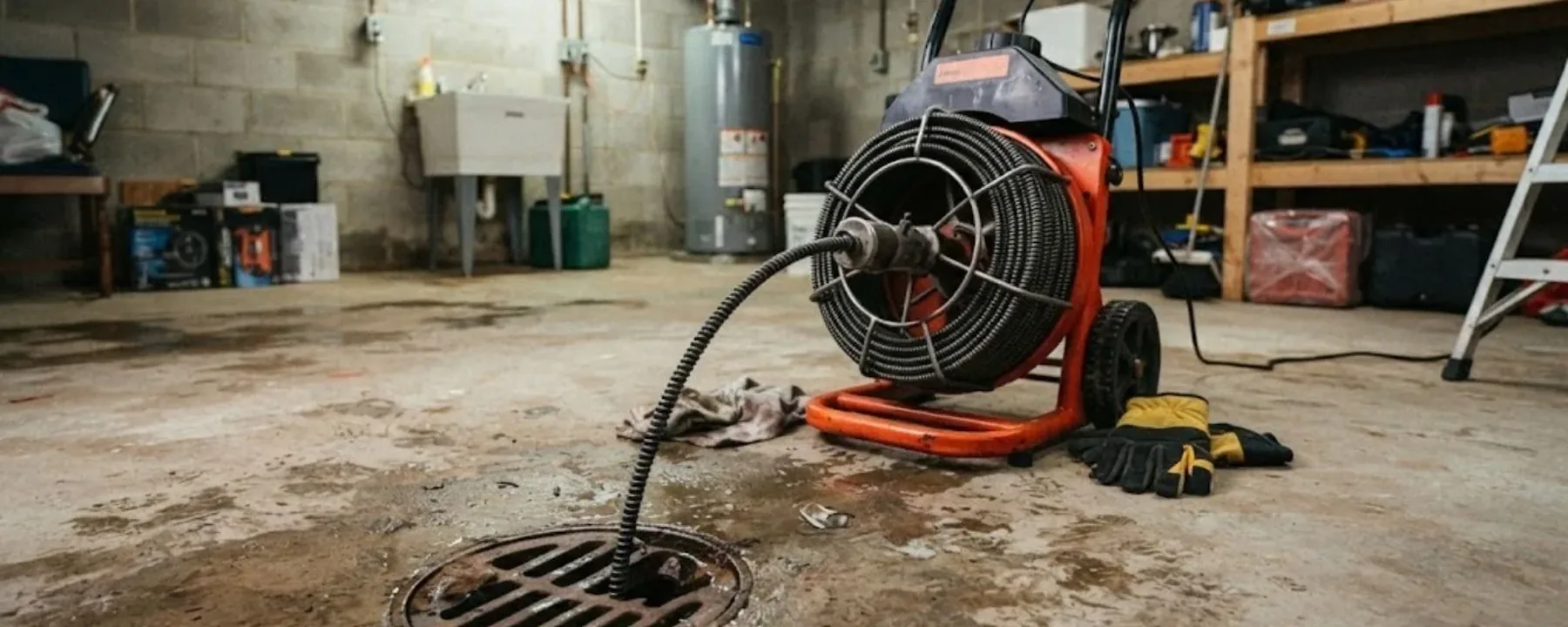
A plumber starts by finding where the blockage sits. A cable machine cuts through hair, grease and soft roots, and a small camera on a flexible rod shows whether the cause is a clog, a crushed section or an offset joint. That camera step also helps you avoid digging up pipe that only needed cleaning.
For heavy buildup, hydro jetting uses high-pressure water to scour the pipe wall instead of poking a hole through the middle. It suits some lines and not others, and the plumber should explain why before using it. For a line that backs up into the house, our drain cleaning crew can run a cable the same day when a plumber is available.
If you are close to Glenside, Jenkintown or the other nearby towns we serve, the dispatcher can tell you when you call whether same-day service is open. For homes in Glenside and Jenkintown, the older cast-iron or clay branch lines are a common reason a quick fizz does nothing.
What shapes the price of clearing a stubborn drain
A plumber cannot name an honest price without seeing the fixture, so you get a clear price before work starts. These are the things that move it.
Want your real number? Call (215) 714-6692 and describe which fixtures are slow.
Call for your priceDrain cleaning questions from Abington homeowners
It rarely clears a real clog. The fizz can loosen a thin film and cut a mild odor, but it does not dissolve hair, grease plugs or roots. Treat it as a light cleaning step, not a repair, and move to a plunger or hand auger if the water stays slow.
No. Do not add anything on top of a chemical cleaner that is still in the drain. The mix can splash or give off gas, and the standing water may be caustic. Tell the plumber what you used so they can protect themselves before opening the trap.
Very hot tap water is the safer choice. Boiling water can crack porcelain or a cold sink and may soften older plastic pipe. For a greasy kitchen drain, hot tap water and a plunger are usually enough to start.
A fast return usually means the blockage was only pushed aside, or the pipe has roots, a sag or buildup that holds new debris. A camera inspection shows which. Ask the plumber for one if the clog keeps coming back.
If only one fixture is slow, the clog is probably in that branch. If sewage rises in a floor drain or several fixtures act up together, the main line may be blocked. Abington Township lists 215-884-8329 as its number when sewage backs up with no water in use.
The township wastewater page lists wipes, paper towels, rags, plastic, kitchen grease and cooking oil as common causes of sewer backups. It says to put wipes in the trash instead of the toilet and to keep grease out of drains.
Same-day appointments are offered when available. Call and describe which fixtures are affected. The dispatcher will tell you honestly whether a plumber can come today, and the line is open 24 hours a day.