
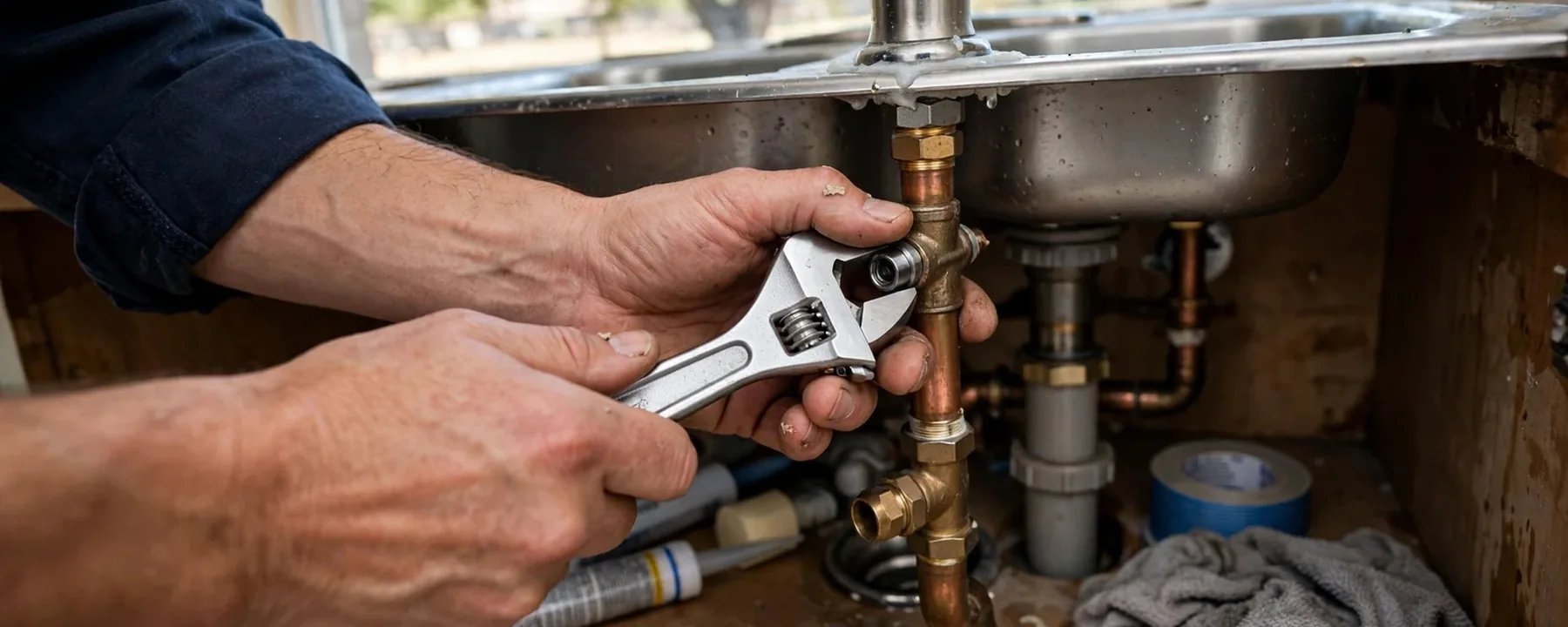
If water drips from the spout while the handle is off, the washer or the valve seat is usually worn, and a repair kit may fix it. If water leaks at the handle stem, tightening the packing nut or replacing the packing often stops it. If water runs inside your wall or basement when you use the hose, the faucet probably froze and split, and it needs replacing.
In Abington, the date that matters is the first fall freeze, which averages near November 7. Disconnect hoses and shut the inside valve before then.
A freeze calendar for Abington outdoor faucets
NOAA's 1991 to 2020 normals use a 50 percent chance of 32 degrees as the benchmark. They are averages, so some years will freeze earlier or later.
| Time of year | What the data suggests | What to do with the outdoor faucet |
|---|---|---|
| Late October | A frost can come before the average first freeze | Pull hoses, splitters and timers. Drain the faucet and shut the inside valve |
| About November 7 | Average first fall freeze at the Philadelphia Northeast Airport station | Your faucet should already be off and drained by this date |
| December to March | The coldest nights and the highest risk for a split | Leave the inside valve closed and the outside faucet open. Check for drips in the basement |
| About April 4 | Average last spring freeze at the same station | Wait a week or two past this date before reopening, since an early spring cold snap can still split a pipe |
| After the last frost | Warm days with cold nights are still possible | Open the inside valve slowly and look for drips at the wall and at the shutoff |
Source type: NOAA 1991 to 2020 normals, Philadelphia Northeast Airport. Your yard may differ, so treat these as a guide.
Why a hose bib splits when the weather turns
A standard hose bib is a short pipe through the wall with a valve at the outer end. When you leave a hose attached, water stays in the pipe behind the valve. If that water freezes, it expands and splits the pipe, usually just inside the wall where you cannot see it.
The split often stays hidden until spring. You turn on the hose, the water goes through the crack and not out of the spout, and your basement ceiling or wall gets wet. If you see a damp joist or a stain below the faucet after the first use of the season, shut the inside valve and call.
A frost-free sillcock is built differently. The valve seat sits deep inside the heated part of the house, and the stem runs through a long tube, so there is little water left at the outside end. It still needs the hose removed in winter, and it needs to tilt slightly downward so it can drain.
Water inside the wall?
Shut the inside valve to the outdoor faucet and call. A dispatcher answers at any hour.
Common outdoor faucet problems and what they usually mean
Drip from the spout when off
The washer or seat inside the valve is worn. A kit or a new valve cartridge often fixes it, if the body is sound.
Leak around the handle
The packing under the handle has dried out. Snug the packing nut a quarter turn, and replace the packing if that does not stop it.
Water sprays at the wall
A crack or a loose joint behind the faucet is likely. Shut the inside valve now and have it looked at.
Low flow at the hose
A clogged vacuum breaker, a half-closed inside valve or rust inside an old pipe can cut the flow.
Faucet wobbles or rotates
The mounting is loose or the pipe behind it is corroded. Do not crank on it, since that can break the line.
Wet basement wall below the faucet
Water inside the wall, often from a freeze split. Turn off the inside valve and call before the damage spreads.
How to shut down a hose bib for winter
This takes about ten minutes per faucet. Do it before the first cold week, not after.
Disconnect the hose and any attachments
Take off splitters, timers and nozzles too. A full hose holds water against the faucet and invites a split.
Find the inside shutoff
In many Abington basements, it sits on the line just inside the wall behind the outdoor faucet. Some faucets have no separate inside valve, and then a plumber may recommend adding one.
Close the inside valve
Turn it fully off. If the handle is stiff or leaks when you turn it, stop and call, since forcing it can break the stem.
Open the outside faucet
Leave it open so the trapped water drains. A few drips are normal.
Drain the inside line if the valve has a bleeder cap
Open the little cap, let the water out into a bucket, and close it again. If there is no cap, leave the outside faucet open.
Cover only if it is not sealed
A foam cover adds little to a faucet that is already drained. Do not wrap a faucet that still has water in it and think it is protected.
What to try yourself and what to hand off
Reasonable to try at home
- Replacing a worn washer on a compression-style bib
- Tightening or repacking a leaking handle stem
- Cleaning a clogged vacuum breaker
- Removing hoses and draining the faucet in fall
- Checking the basement for drips each spring
Call a licensed plumber
- A faucet that leaks inside the wall
- Replacing a hose bib with a frost-free sillcock
- A shutoff that will not close or leaks when turned
- A faucet on a line you cannot trace
- Any pipe work in a finished wall or ceiling
Abington note: freeze dates, Aqua tips and the township permit list
The average last spring freeze near April 4 and the average first fall freeze near November 7 come from NOAA's 1991 to 2020 normals at the Philadelphia Northeast Airport station. A nearby Willow Grove station lists November 1 and April 11, a little tighter on both ends. If you live toward the Willow Grove side, plan to shut off the faucet closer to November 1 rather than November 7.
Aqua Pennsylvania's guidance tells customers to shut off and drain outside faucets, including lawn sprinkler lines, and to keep outdoor meter pit lids intact. It also says a thin stream of water from the tap farthest from the meter can help when temperatures approach 10 degrees Fahrenheit. That helps if an indoor pipe sits near an exterior wall, but it does not replace draining the outdoor faucet.
Abington Township's code lists bib valve replacement among the residential work that still needs a permit, if the new valves have an approved vacuum breaker. A plumber registered with the township pulls plumbing permits, not the homeowner. Ask your plumber whether your swap needs one, and ask the township's Community Development office if you are not sure.
Source type: NOAA 1991 to 2020 climate normals, Aqua Pennsylvania customer guidance, and Abington Township code. Local frost depth is not stated here, so ask your plumber.
Replacing the faucet instead of repairing it
A new faucet makes sense when the body is cracked, the threads are corroded or the line behind it has frozen before. A frost-free model costs more than a basic bib, but it is the version that tends to survive a hard cold snap. It also needs the right length for your wall thickness and a slight slope so it drains.
The plumber will usually cut the old faucet out, check the pipe behind it, and solder or press on a new one with a vacuum breaker. For more on that kind of work, see our page on faucet repair, which covers indoor and outdoor fixtures. If a split pipe is hiding in the wall, a leak detection visit can find the wet area before anyone opens drywall.
Homes near Wyncote and Elkins Park often have older pipe behind the faucet, which is one more reason to look at the line and not just the spout. If you are not sure which type you have, a photo of the wall side in the basement tells the plumber a lot.
What decides the cost of an outdoor faucet repair
A plumber cannot name an honest price until they see the wall and the line behind it. You get a clear price before work starts, and these are the factors.
If you want a number for your own house, call (215) 714-6692. Most homeowner policies cover sudden pipe bursts but not slow leaks, so photograph any damage first.
Call for your priceOutdoor faucet questions from Abington homeowners
Aim for late October, before the average first fall freeze near November 7 at the Philadelphia Northeast Airport station. NOAA's Willow Grove station shows about November 1. Disconnect the hose, close the inside valve and leave the outside faucet open.
The average last spring freeze is near April 4, but a late cold night can still happen. Wait a week or two past that date for safety. Open the inside valve slowly and check the wall and basement for drips.
It is not required, but it is a good upgrade if your standard bib has frozen before. A frost-free sillcock puts the valve seat inside the heated house. It still needs the hose removed in winter and a slight downward tilt.
Turn the hose on and watch both the spout and the wall. If water sprays or drips inside the basement while the spout runs weakly, the pipe likely split. Shut the inside valve and call a plumber before water damages the wall.
The township code lists bib valve replacement as work that still needs a permit when the replacement has an approved vacuum breaker. Plumbing permits come from a master plumber registered with the township. Ask your plumber or Community Development about your case.
A slow drip wastes water and can freeze into a bigger problem in winter. A worn washer is often an easy fix. If the drip is inside the wall, or the basement stays damp, have a plumber check it soon.
Draining is more reliable. Aqua Pennsylvania suggests shutting off and draining outside faucets, and a thin stream from an indoor tap helps only with indoor lines near cold walls. Leaving a hose attached can trap water and cause the split you are trying to prevent.