
Yes, most of them work, but each type only catches one kind of leak. A puddle sensor on the floor tells you water has already landed. A flow monitor on the main watches for water that keeps moving when nobody is using any. A shutoff valve goes one step further and closes the supply when something looks wrong.
None of them replaces a meter check or a plumber. A sensor can sit in the wrong spot, run on a dead battery or lose its Wi-Fi, and none of them can see inside a wall. Treat a device as an early warning, confirm with the meter, and call (215) 714-6692 when the signs point to a hidden leak.
Three kinds of device and what each one actually watches
Product names change every year, but nearly everything on the shelf falls into one of these groups. Knowing the group tells you what the device can and cannot do.
| Device type | What it watches | What it catches | Usual blind spot |
|---|---|---|---|
| Puddle sensor | Moisture at one spot, such as under a sink or beside a water heater | A slow drip that reaches the floor | A leak anywhere else in the house |
| Flow monitor on the main | Water moving through the supply line | A leaking pipe between fixtures, or a toilet running all night | A leak small enough to look like normal use |
| Shutoff valve with sensors | Both, with a motorized valve on the main | A burst that would otherwise run for hours | A dead battery, lost power, or a valve that sticks from lack of use |
| Freeze alert | Air temperature near pipes | A cold garage or crawl space before the pipe splits | A split in a pipe inside a warm wall |
Features differ by brand and model. Read the manual for what your unit does when it loses power or Wi-Fi.
Leaks these devices usually miss
A drip behind a wall
A puddle sensor only trips when water reaches it. A pinhole leak inside a wall can wet drywall and insulation for weeks without a drop touching the floor.
A leak too small to flag
Aqua Pennsylvania says even a small drip can waste up to 140 gallons a week. Many monitors only alert above a set flow, so a slow seep can slide under the threshold.
A toilet that seeps into the bowl
Water running from the tank into the bowl never touches a floor sensor. Drop food coloring in the tank and wait 15 to 20 minutes. Color in the bowl means the flapper is leaking.
The outdoor stretch of supply line
A device inside the house cannot see the line between the curb stop and the building. If the meter moves while the house is dry, the problem may be out in the yard.
A drain or sewer problem
Leak sensors watch clean supply water. A slow sewer backup or a cracked drain pipe will not set them off.
A meter check you can run tonight
Aqua's own customer guidance describes the same test plumbers use first. It costs nothing and works whether or not you own a single sensor.
Stop every use of water
Pause the dishwasher and washing machine, turn off the ice maker if you can, and make sure nobody flushes or runs a tap.
Find the meter
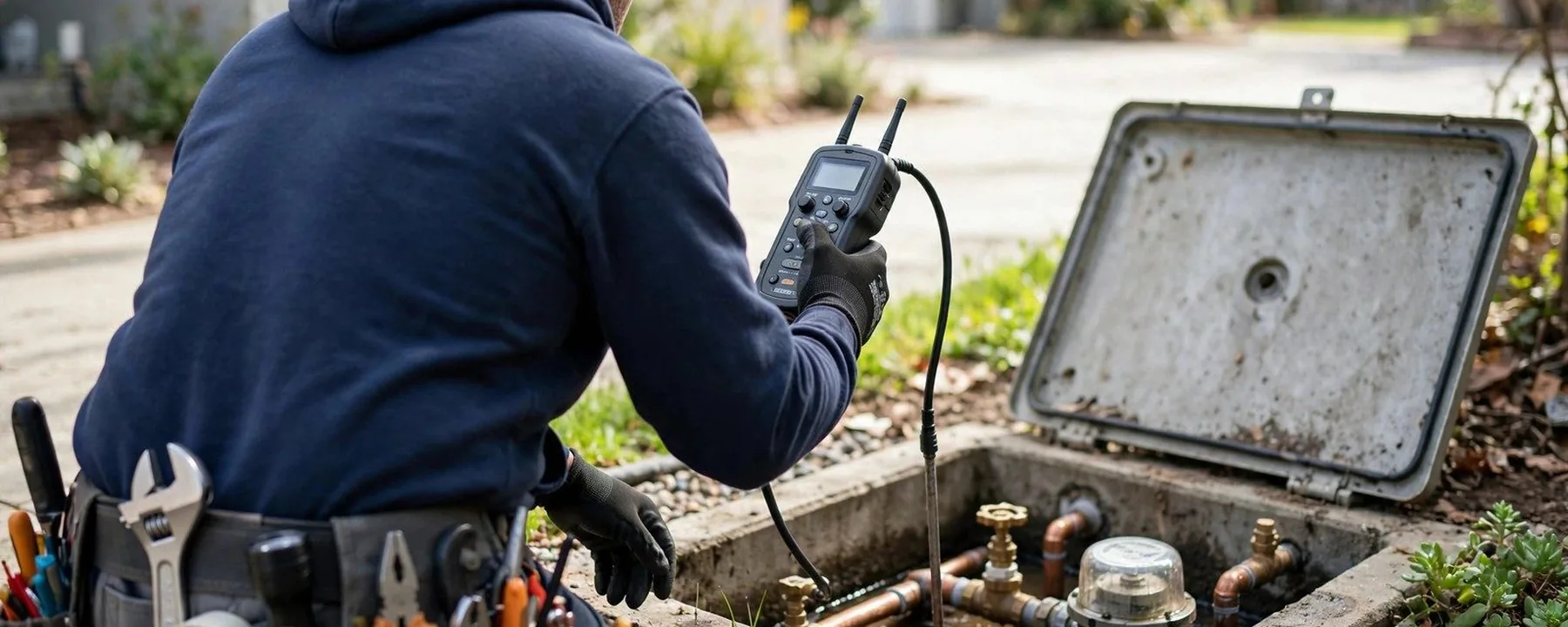
In many houses it sits on the basement wall where the line comes in. Some are in an outdoor pit with a lid, and you can keep that lid clear and intact.
Write down the reading
Note the numbers and look at the small leak indicator or low-flow dial if your meter has one.
Wait, then compare
Aqua's leak guide suggests 20 to 30 minutes for a quick test, and its customer guide describes a two-hour window with no water use for a more sensitive one. If the meter changes, you likely have a leak.
Close the main and look again
If the reading still moves with the house shut off, the leak is between the meter and the building. If it stops, the leak is inside, and a plumber can narrow it down.
Meter still moving with everything off?
That is the signal worth acting on. Call and a dispatcher will tell you whether same-day service is available.
Water bills, meters and leaks in Abington Township
Aqua Pennsylvania supplies public water to most of Abington Township. Aqua's own leak adjustment page says the company does not offer leak adjustments in Pennsylvania. That means a hidden leak is a cost the homeowner carries, which is the practical argument for an early warning or a habit of reading the meter.
Aqua owns the meter, but the customer owns the meter pit, the plumbing inside it and the line from the curb stop to the building. A sensor in the basement cannot see that outdoor stretch, so a moving meter with a dry house points you toward the yard. Aqua's customer service line is 877.987.2782 for questions about its side of the line.
The Pennsylvania Insurance Department advises photographing or filming damage before cleanup, keeping receipts and contacting your insurer as soon as possible. Ask your insurer whether a leak sensor or automatic shutoff earns a discount and whether water backup coverage is on your policy. Do not assume either one.
Source type: Aqua Pennsylvania customer guidance and leak adjustment page, Abington Township website, Pennsylvania Insurance Department homeowner guide
What you can handle and what to hand to a plumber
A sensor is a fair weekend project. Cutting into the supply line is not.
Reasonable to do yourself
- Place puddle sensors under sinks, beside the water heater and behind toilets
- Set a reminder to check batteries and test the alarm
- Run the meter test and the toilet dye test
- Photograph any damage before you clean up
- Close the main when an alarm sounds
Call a licensed plumber
- The meter keeps moving with the main closed
- A stain, bubble or musty smell on a ceiling or wall
- A warm patch on the floor or a sudden drop in pressure
- Installing a shutoff valve on the main line
- Pinpointing a buried or under-slab line
How a plumber finds the leak the sensor cannot
When a meter test says water is leaking and no sensor has tripped, the next move is to narrow it down without tearing out drywall. A plumber doing leak detection usually starts with the meter and a pressure check on isolated sections of line. Moisture meters, thermal cameras and acoustic listening gear then help locate the spot, though results depend on the pipe material and how deep it runs.
Age matters here. According to Census American Community Survey estimates for 2020 to 2024, about 61 percent of the homes in Abington Township were built before 1960. Houses from that era often have older copper or galvanized pipe, so a sensor in the right place is cheap protection, and a plumber's opinion on the pipe itself is worth having.
Homeowners in Glenside and Jenkintown are next door to the township, and older houses there often raise the same questions about pipe age. If the leak turns out to be on the outdoor stretch, the repair falls under water service line repair, and the curb stop is where responsibility changes.
When the alarm goes off at 2 a.m.
Close the main valve first, then look for the wet spot and take photos. Shutting the main takes seconds and stops the damage from growing. Call (215) 714-6692 and describe what you found so a plumber can be sent while you protect your belongings.
Water leak sensor questions from Abington homeowners
A plain sensor only sounds an alarm or sends an alert, so it will not stop the water by itself. A shutoff valve tied to sensors can close the main automatically. Even then, you still need a plumber to repair the pipe that failed.
Many sound a local alarm without Wi-Fi, but phone alerts usually need a working connection. If you are away from home, a sensor that cannot reach the internet cannot warn you. Check the manual for how your unit behaves when the connection drops.
Start where leaks are most likely to begin: under the kitchen sink, beside the water heater, behind toilets, near the washing machine and low in the basement where the supply line enters. Add one near a sump pit if you have one.
No. A sensor watches one spot, while the meter reads all the water entering the house. The meter test also catches the outdoor stretch of line that sensors inside the house cannot see.
Aqua's published leak adjustment page says it does not offer leak adjustments in Pennsylvania. Billing details vary by account, so call Aqua at 877.987.2782 to confirm your reading and billing period.
Close the main valve and read the meter again after a few minutes. If it still moves, the water is escaping between the meter and the house. If it stops, the leak is inside, and a plumber can narrow it down.
Call when the meter moves with all water off, when a ceiling or wall shows a stain that grows, or when pressure drops with no clear cause. Those signs mean water is going somewhere you cannot see, and guessing can open walls you did not need to open.